01What is reduced mobility in older adults?
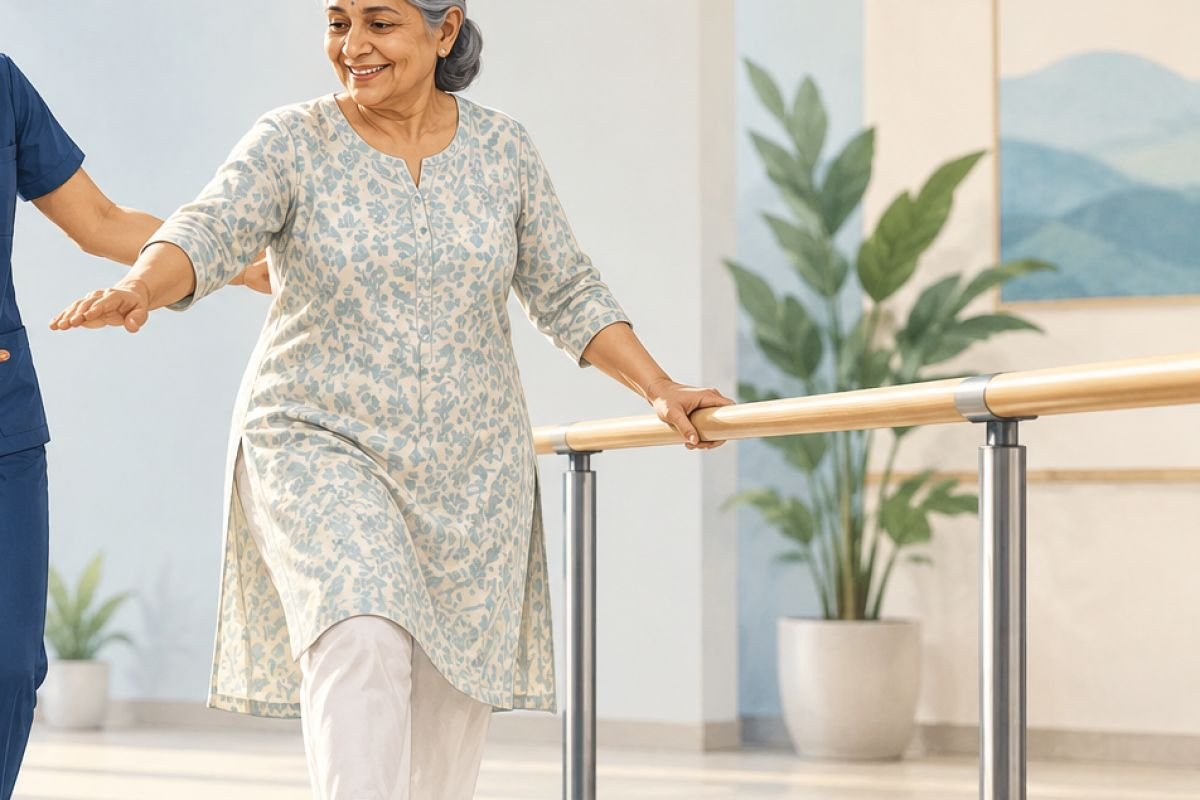
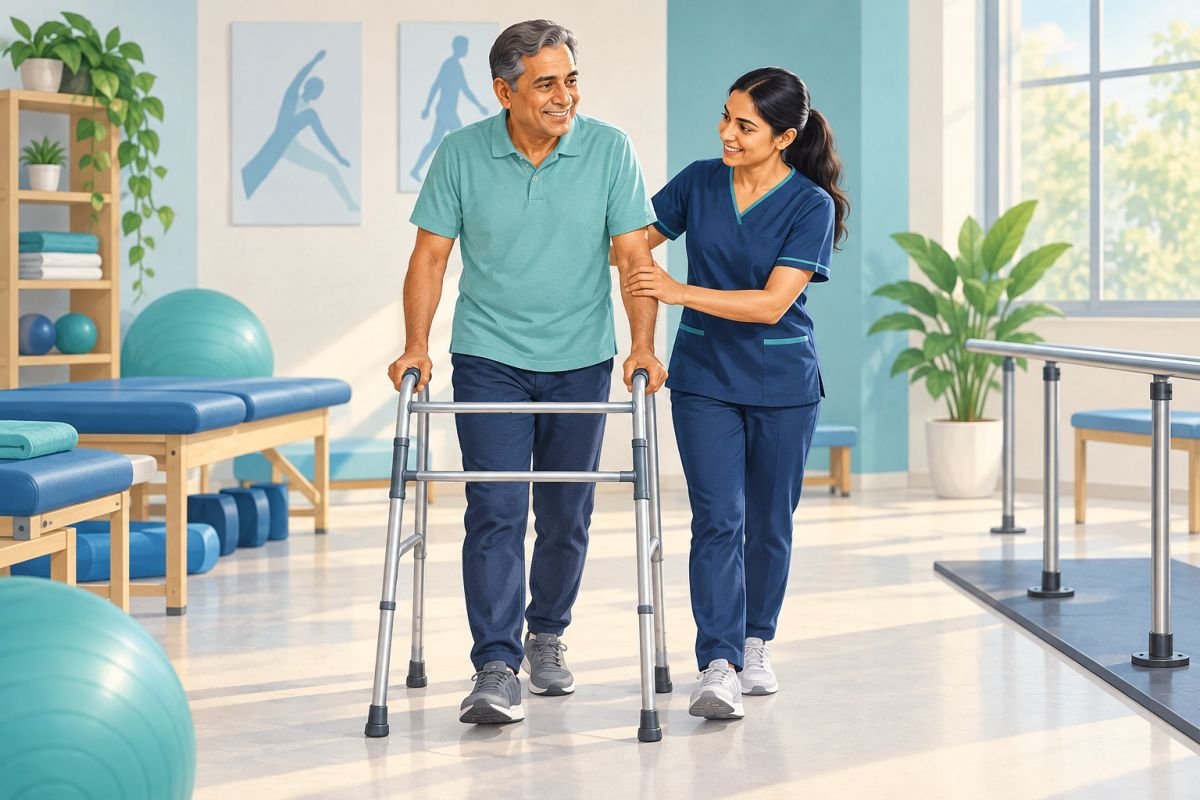
Mobility rehabilitation focuses on how well an older person can move around – getting in and out of bed, standing up from a chair, walking indoors and outdoors, and using stairs.
Loss of mobility often happens gradually and can be mistaken for “just getting old”. In many cases, targeted exercise can improve function, even in people in their 80s and 90s.
02Common symptoms
- Difficulty getting up from bed, chairs or the toilet
- Needing help to walk or relying more on walking aids
- Reduced walking distance and frequent rests
- Difficulty using stairs
- Loss of confidence going outside
03Possible causes and risk factors
- Hospital admission or illness causing deconditioning
- Arthritis and joint pain
- Neurological conditions such as stroke or Parkinson’s disease (after medical guidance)
- Long periods of inactivity
- Fear of falling
04How a physiotherapy assessment helps

Your assessment with Dr. Pankaj B. LokhandeBPTh, MPTh (Ortho & Sports), PhD Scholar (MUHS)
We assess bed mobility, transfers, walking, balance and strength, and talk with the patient and family about home layout and daily routine. Goals are practical and specific.
05Rehabilitation approaches we may use
Functional strength training
Practising sit-to-stand, steps and other daily movements.
Walking rehabilitation
Improving distance, speed and safety.
Walking aid advice
Choosing and using the right aid correctly.
Joint mobility
Maintaining comfortable movement.
Endurance building
Gradually increasing activity tolerance.
Carer training
Safe techniques for assisting movement at home.
Your plan is chosen after assessment. Not every approach listed here is suitable for every person.
06Who may benefit
- Older adults after hospital discharge
- People with long-term mobility decline
- Seniors wanting to stay independent at home
07Safety precautions
- Progress is gradual and based on daily energy levels and health.
- Monitor blood pressure and blood sugar as advised by your doctor.
- Always have support nearby during early walking practice.
08When to see a doctor first
- Sudden loss of mobility, confusion or weakness – seek urgent medical care
- Chest pain or breathlessness on minimal effort
- Repeated falls
09Frequently asked questions
Can mobility improve in very old age?
Yes. Research shows that older adults, including those over 80, can improve strength and mobility with appropriate exercise.
How long will rehabilitation take?
It depends on starting ability, health and goals. We review progress regularly.
Is a walker better than a stick?
It depends on balance and strength. We will recommend the safest option.
Can family members help?
Yes. We encourage family involvement and teach safe ways to assist.
This page provides general information and is not a diagnosis or a substitute for an individual assessment. Recovery varies from person to person. See our medical disclaimer.