01About Knee Physiotherapy Rehab
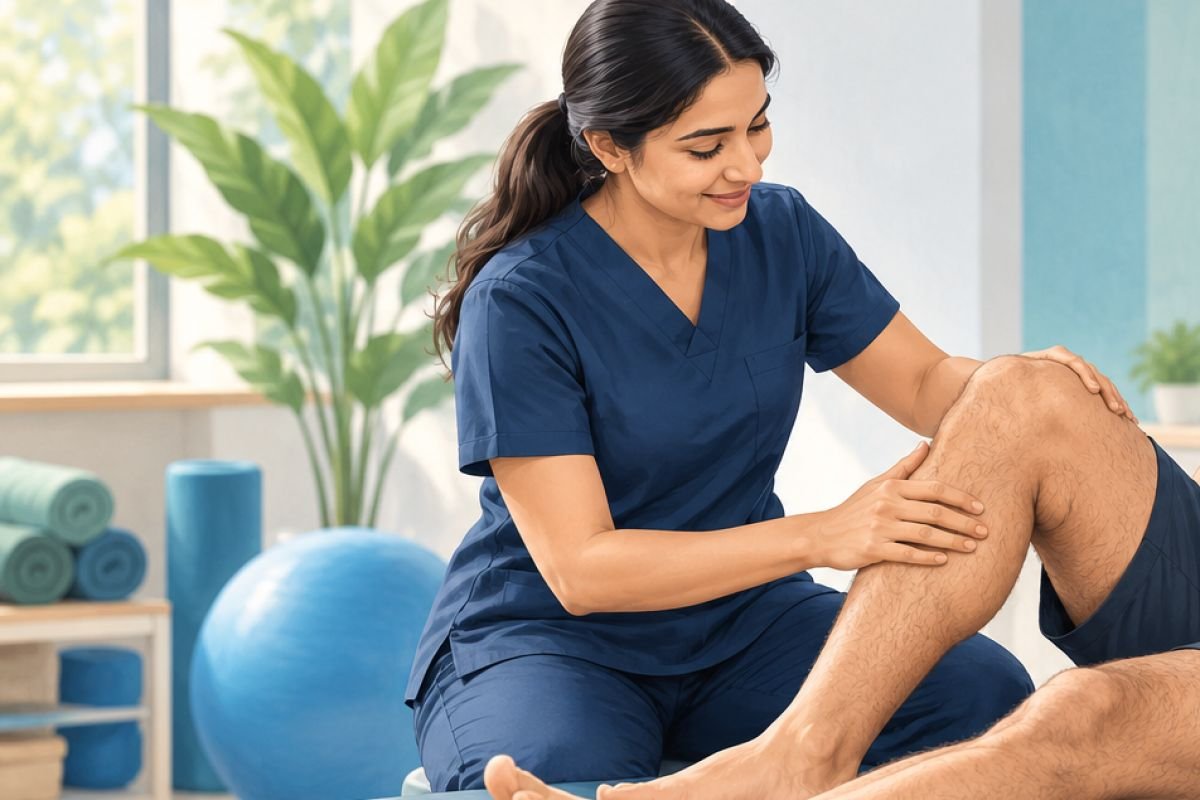
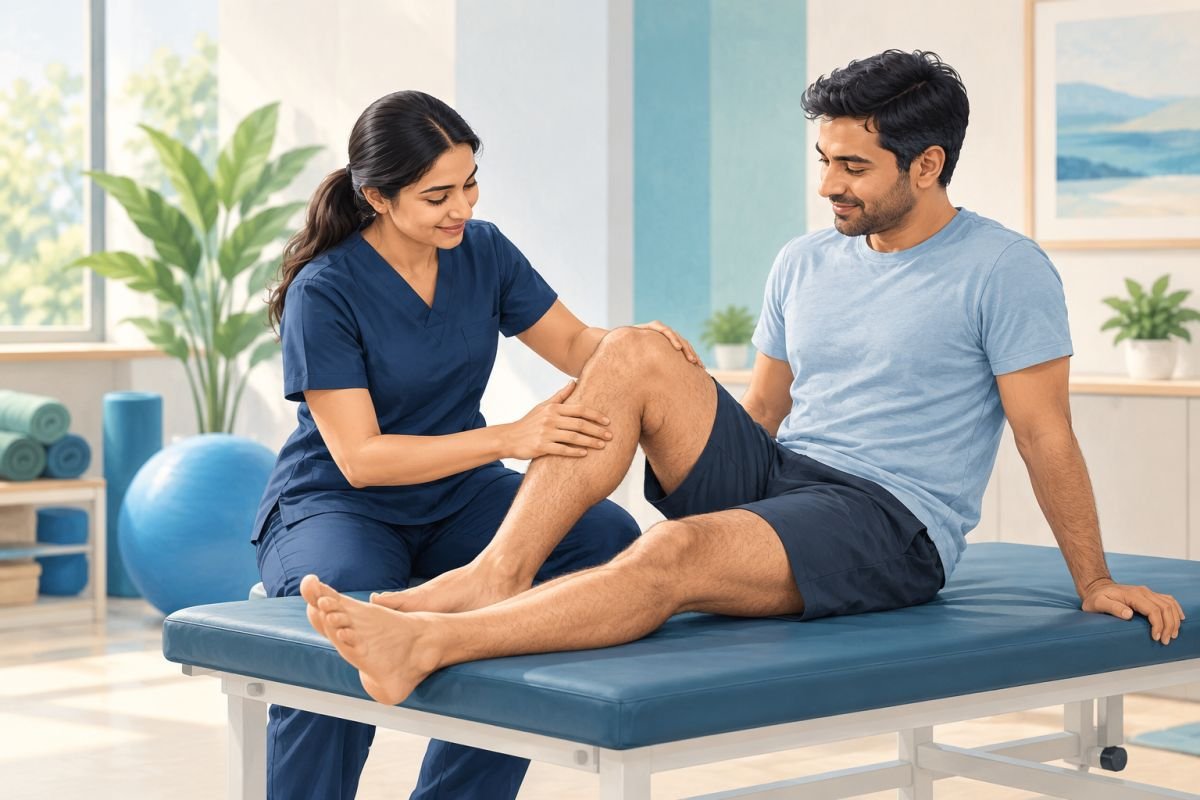
Knee physiotherapy addresses pain and loss of function from the knee joint and the muscles, ligaments and cartilage around it. Problems range from age-related osteoarthritis to sports injuries such as ACL and meniscus tears, and overuse conditions like runner’s knee.
Across almost all knee conditions, research supports exercise – especially strengthening of the thigh and hip muscles – as a core part of treatment. We combine this with education, activity advice and, where helpful, hands-on techniques.
02What this service covers
- Knee pain
- Knee osteoarthritis
- Knee stiffness
- ACL injury rehabilitation
- Meniscus rehabilitation
- Runner’s knee
- Knee replacement rehab
- Quadriceps strengthening
- Knee mobility training
03Common concerns we see
- Pain climbing or descending stairs, squatting or kneeling
- Stiffness after sitting, especially in the morning
- Swelling after activity
- The knee giving way, catching or locking
- Difficulty sitting cross-legged or on the floor
04Possible causes and risk factors
- Age-related joint changes (osteoarthritis)
- Twisting injuries in sport, which can affect ligaments or meniscus
- Sudden increases in running, stair work or squatting
- Weakness of the quadriceps and hip muscles
- Higher body weight, which increases load through the knee
05How a physiotherapy assessment helps

Your assessment with Dr. Pankaj B. LokhandeBPTh, MPTh (Ortho & Sports), PhD Scholar (MUHS)
We examine knee range of motion, swelling, ligament stability, meniscus provocation tests, muscle strength and control during functional tasks such as squats, step-downs and single-leg balance.
If an injury looks significant – for example, a suspected ligament rupture with instability or a locked knee – we will advise you to see an orthopaedic surgeon and can continue rehabilitation alongside their care.
06Rehabilitation approaches we may use
Quadriceps and hip strengthening
The foundation of most knee programmes, progressed from simple to functional exercises.
Range-of-motion work
Restoring bend and straightening, especially after injury or surgery.
Balance and control
Single-leg and step exercises that train the knee to stay aligned and stable.
Activity modification
Temporarily adjusting stairs, running or kneeling while strength improves.
Manual therapy and taping
May be used for short-term symptom relief alongside exercise.
Weight and activity guidance
For knee osteoarthritis, general activity and weight management are part of the plan.
Your plan is chosen after assessment. Not every approach listed here is suitable for every person.
07Who may benefit
- People with knee osteoarthritis wanting to stay active
- Athletes after ACL or meniscus injury, with or without surgery
- Runners and gym users with front-of-knee pain
- People recovering from knee replacement
08Safety precautions
- Some discomfort during exercise can be acceptable if it settles within 24 hours; we will explain how to monitor this.
- After surgery, always follow your surgeon’s specific restrictions.
- Avoid deep squatting or kneeling during flare-ups until advised.
09When to see a doctor first
- A knee that is hot, red and swollen with fever
- A locked knee that cannot straighten
- Rapid swelling within hours of a twisting injury, or inability to bear weight
- Calf pain, swelling and redness, particularly after surgery or long travel
10Frequently asked questions
Will physiotherapy help knee arthritis?
Exercise therapy is recommended in clinical guidelines as a core treatment for knee osteoarthritis. Many people experience less pain and better function, although results vary.
Can I avoid surgery for an ACL tear?
Some people manage well with structured rehabilitation alone, while others benefit from reconstruction. The decision depends on instability, activity goals and other injuries, and should be made with an orthopaedic surgeon.
Is walking good for knee pain?
For most people, yes – within comfort. We help you find the right amount and build up gradually.
How soon will I feel better?
Many people notice changes within a few weeks of consistent exercise, but meaningful strength gains take longer. We review progress regularly.
FURTHER READING
This page provides general information and is not a diagnosis or a substitute for an individual assessment. Recovery varies from person to person. See our medical disclaimer.