01What is knee pain?
Knee pain is a broad description rather than a diagnosis. Pain at the front of the knee, the inside or outside, or the back each suggests different possible sources. Age, activity level and how the pain started also help narrow down the cause.
This page is a starting point. We also have dedicated pages for knee osteoarthritis, ACL and meniscus injuries, and runner’s knee.
02Common symptoms
- Pain with stairs, squatting, kneeling or sitting for long periods
- Swelling or puffiness around the knee
- Stiffness, especially after rest
- Clicking, catching, locking or giving way
- Pain during or after running and sport
03Possible causes and risk factors
- Patellofemoral (front-of-knee) pain from overload
- Osteoarthritis
- Ligament or meniscus injuries
- Tendon problems such as patellar tendinopathy
- Referred pain from the hip or lower back
04How a physiotherapy assessment helps

Your assessment with Dr. Pankaj B. LokhandeBPTh, MPTh (Ortho & Sports), PhD Scholar (MUHS)
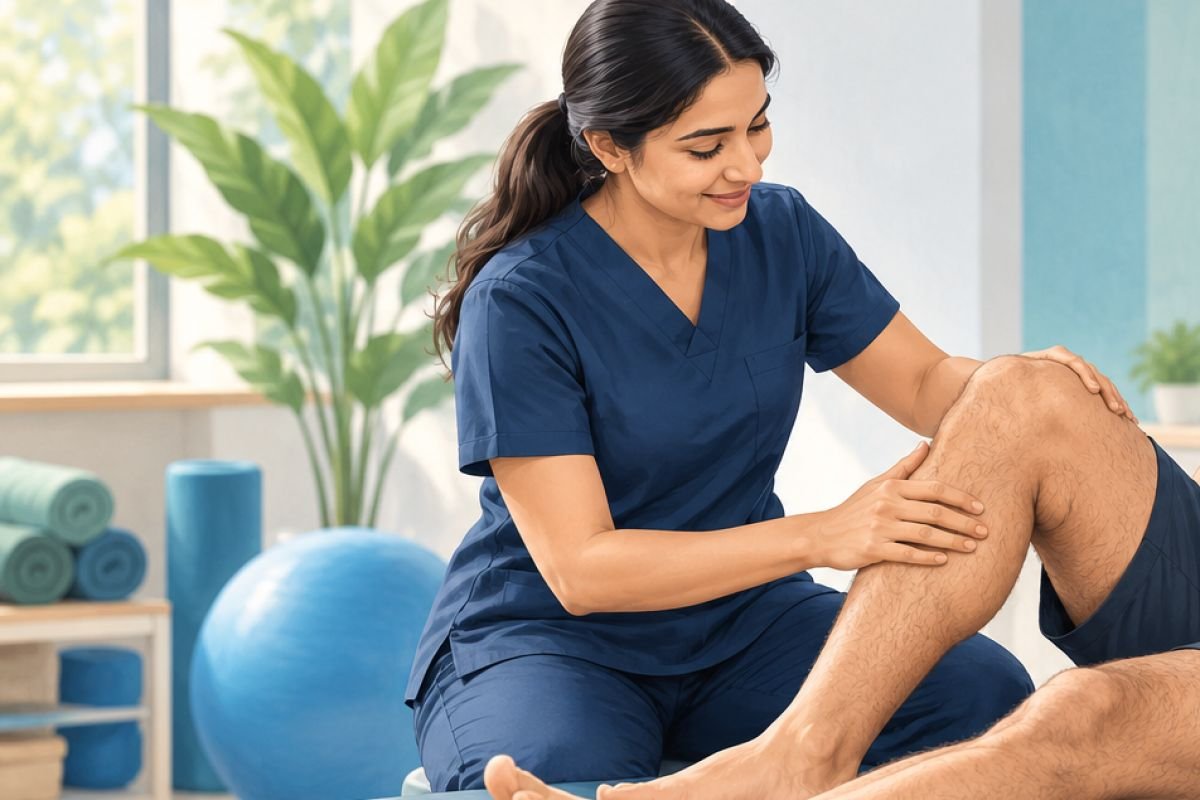
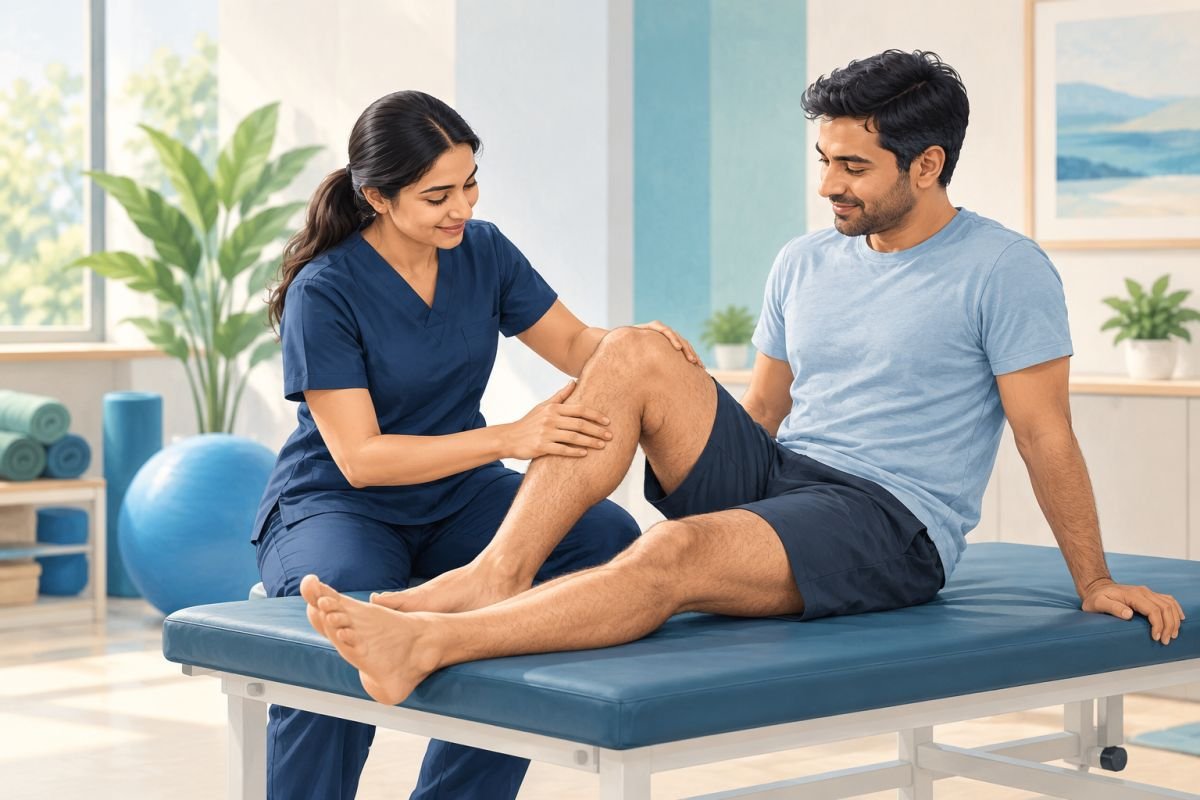
We assess the knee in detail and check the hip, ankle and lower back. Functional tests – such as squats, step-downs and single-leg balance – show how the knee copes with load.
Clear findings help us explain what is likely happening and whether medical or surgical opinion is needed.
05Rehabilitation approaches we may use
Quadriceps and hip strengthening
Core treatment for most knee pain conditions.
Load management
Adjusting stairs, running and squats to a tolerable level.
Mobility work
Improving knee, hip and ankle range where restricted.
Taping or bracing
Short-term options for symptom relief in selected cases.
Movement retraining
Improving control during squatting, stairs and landing.
Activity plan
Gradually rebuilding your walking, sport or exercise routine.
Your plan is chosen after assessment. Not every approach listed here is suitable for every person.
06Who may benefit
- Adults with knee pain from any cause after assessment
- Runners, gym users and recreational athletes
- Older adults with stiffness or arthritis
- Teenagers with activity-related knee pain (attending with a parent)
07Safety precautions
- Pain during exercise should usually be mild and settle within a day.
- Avoid deep kneeling and squatting during flare-ups unless advised.
- Use ice or rest briefly for flare-ups, then return to gentle activity.
08When to see a doctor first
- Hot, red, swollen knee with fever
- Inability to bear weight or straighten the knee after injury
- Rapid swelling after a twisting injury
- Calf pain and swelling, especially after travel or surgery
09Frequently asked questions
Is my knee pain arthritis?
Not necessarily. Many conditions cause knee pain. Our article on knee pain vs knee arthritis explains the key differences, and an assessment can clarify.
Should I stop exercising?
Usually you can stay active with some modifications. Complete rest often leads to stiffness and weakness.
Do I need a knee brace?
Some people benefit from a brace in specific situations. Strengthening is usually more important in the long term.
Can weak hips cause knee pain?
Hip weakness can affect knee alignment and load during activity, which is why we often include hip exercises.
FURTHER READING
This page provides general information and is not a diagnosis or a substitute for an individual assessment. Recovery varies from person to person. See our medical disclaimer.