01What is patellofemoral pain (runner’s knee)?
“Runner’s knee” is the common name for patellofemoral pain – pain around or behind the kneecap. Despite the name, it affects cyclists, gym-goers, dancers, teenagers and people who do not run at all.
It is usually related to the knee being loaded more than it can currently tolerate, rather than structural damage. Hip and quadriceps strengthening are among the best-supported treatments.
02Common symptoms
- Dull ache around or behind the kneecap
- Pain with running, especially downhill
- Pain on stairs, squatting or kneeling
- Pain after sitting for long periods with knees bent
- Occasional grinding sensations (often harmless)
03Possible causes and risk factors
- Rapid increase in running distance, speed or hills
- Weakness of the hip and quadriceps muscles
- Reduced recovery between sessions
- Changes in footwear or running surface
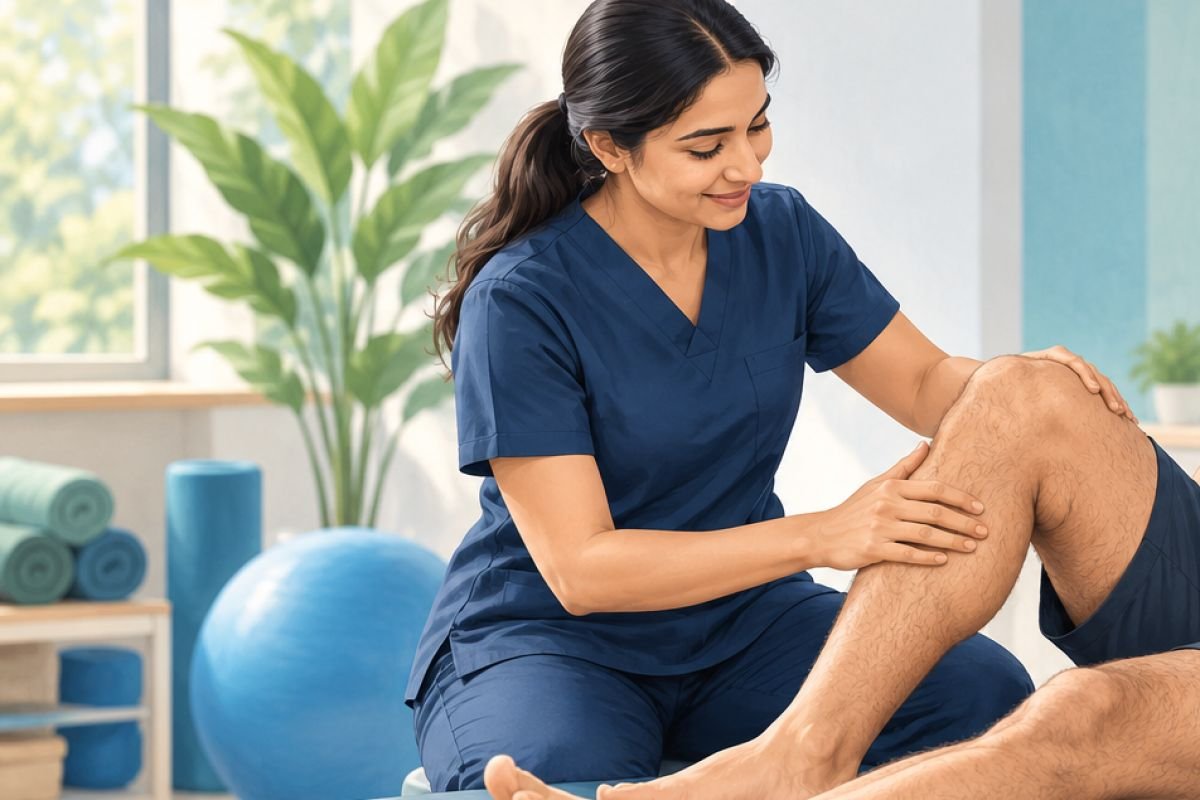
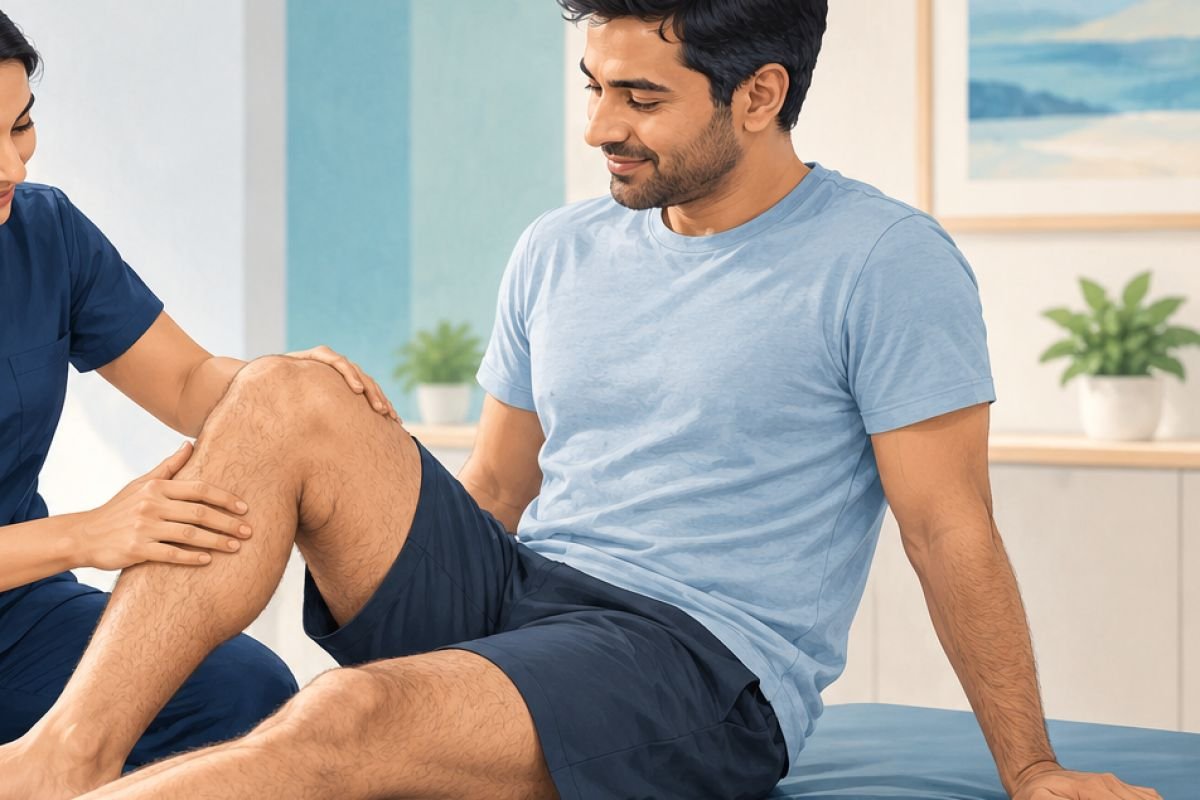
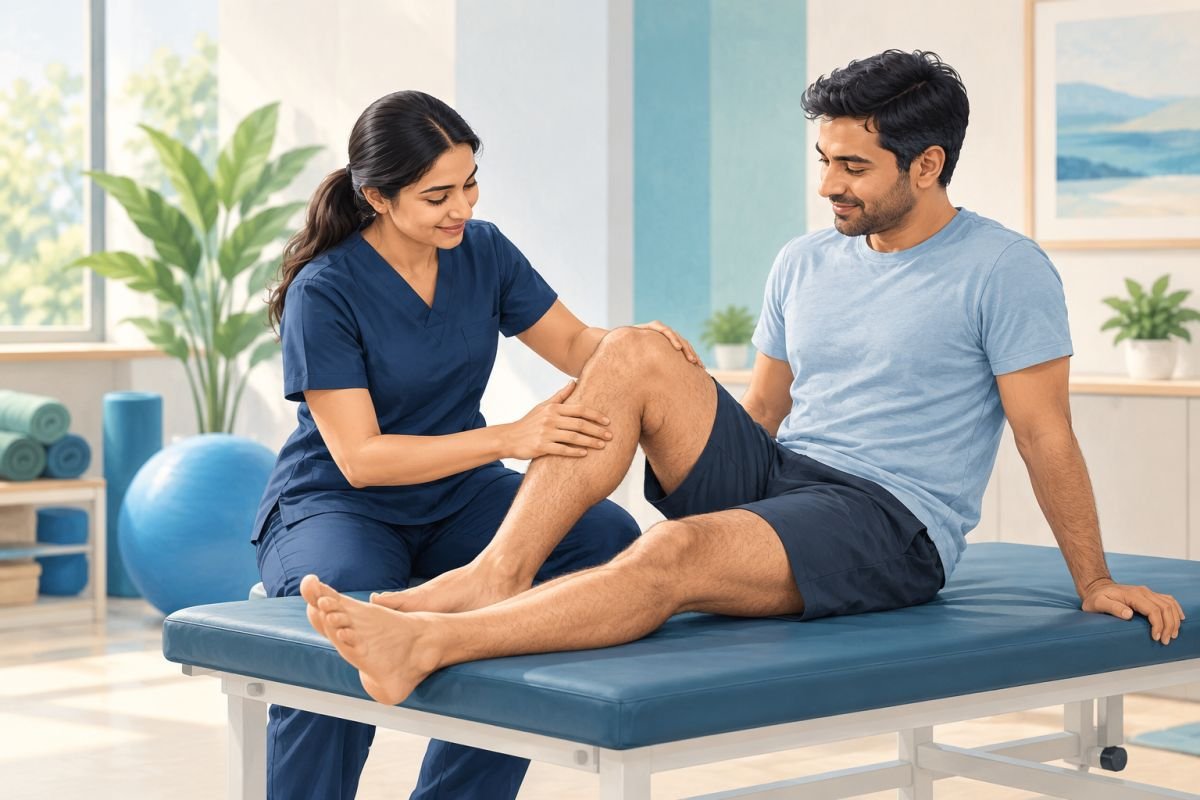
04How a physiotherapy assessment helps

Your assessment with Dr. Pankaj B. LokhandeBPTh, MPTh (Ortho & Sports), PhD Scholar (MUHS)
We review your training history, then assess knee and hip strength, single-leg control, flexibility and, where useful, your running pattern.
This allows us to identify the factors most likely to be contributing and set a plan that keeps you as active as possible.
05Rehabilitation approaches we may use
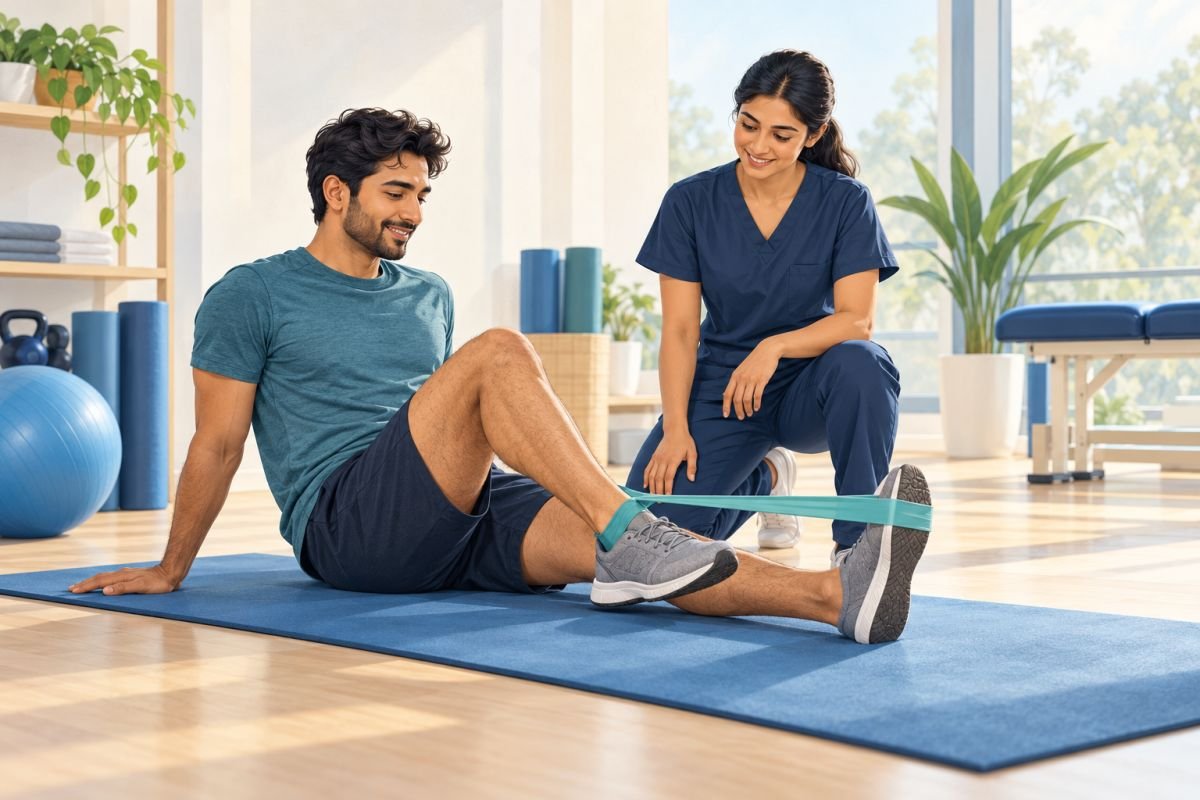
Hip and knee strengthening
Progressive exercises for the gluteal and quadriceps muscles.
Load management
Temporarily adjusting running volume, hills and speed work.
Running technique advice
Small changes such as cadence may reduce knee load for some runners.
Taping
Short-term option to help manage symptoms.
Graded return to running
A structured plan to rebuild distance.
Cross-training
Maintaining fitness with lower-load activities.
Your plan is chosen after assessment. Not every approach listed here is suitable for every person.
06Who may benefit
- Runners and joggers
- Teenage athletes (with parental consent)
- Gym users who squat and lunge
- Cyclists and dancers
07Safety precautions
- Avoid sudden jumps in training volume after symptoms improve.
- Mild discomfort during exercise can be acceptable if it settles quickly.
- Persistent swelling is not typical and should be reviewed.
08When to see a doctor first
- Significant swelling or locking
- Knee giving way
- Pain after a fall or direct blow
09Frequently asked questions
Do I have to stop running?
Not always. Many runners continue at a reduced load while strengthening. We will help you find a tolerable level.
Will new shoes fix my knee pain?
Footwear can play a role, but strength and training load are usually more important.
How long does runner’s knee take to improve?
It can take several weeks to a few months of consistent exercise. Patience and gradual progression matter.
Is the grinding sound in my knee a problem?
Grinding without pain or swelling is common and usually not a concern.
This page provides general information and is not a diagnosis or a substitute for an individual assessment. Recovery varies from person to person. See our medical disclaimer.