01About Spine Physiotherapy Rehab
Spine physiotherapy covers the assessment and rehabilitation of the neck (cervical spine), mid-back (thoracic spine) and lower back (lumbar spine). It includes pain arising from muscles, joints and discs, as well as nerve-related symptoms such as sciatica.
Long hours at a desk, long commutes, heavy lifting and reduced activity all place demands on the spine. Our approach focuses on helping you understand your pain, restoring confident movement and building the strength and habits that help reduce flare-ups.
02What this service covers
- Back pain
- Neck pain
- Sciatica-related rehabilitation
- Cervical spondylosis
- Lumbar disc problems
- Spinal mobility
- Posture education
- Functional strengthening
03Common concerns we see
- Lower back pain that makes bending, sitting or getting out of bed difficult
- Neck stiffness or pain with headaches, often worse after screen work
- Pain, tingling or numbness travelling into the buttock, leg, arm or hand
- Repeated flare-ups of back pain with lifting or long drives
- Feeling “locked” or guarded and afraid to move
04Possible causes and risk factors
- Prolonged sitting or staying in one position for long periods
- Lifting or twisting when tired or deconditioned
- Low overall activity levels and reduced trunk and hip strength
- Age-related changes in spinal discs and joints, which are common and often painless
- Stress, poor sleep and worry about pain, which can all increase sensitivity
05How a physiotherapy assessment helps

Your assessment with Dr. Pankaj B. LokhandeBPTh, MPTh (Ortho & Sports), PhD Scholar (MUHS)
We take a detailed history and carry out a physical examination that includes movement testing and, when appropriate, a neurological check of reflexes, sensation and strength.
An important part of the assessment is screening for “red flag” signs that need urgent medical attention. For most people, scans are not needed to begin rehabilitation; we will recommend them only when they would change the plan.
06Rehabilitation approaches we may use
Reassurance and education
Understanding your pain helps reduce fear and makes it easier to stay active.
Graded movement
Restoring comfortable, confident movement of the spine in all directions.
Strengthening
Progressive trunk, hip and shoulder-girdle strengthening to support daily tasks.
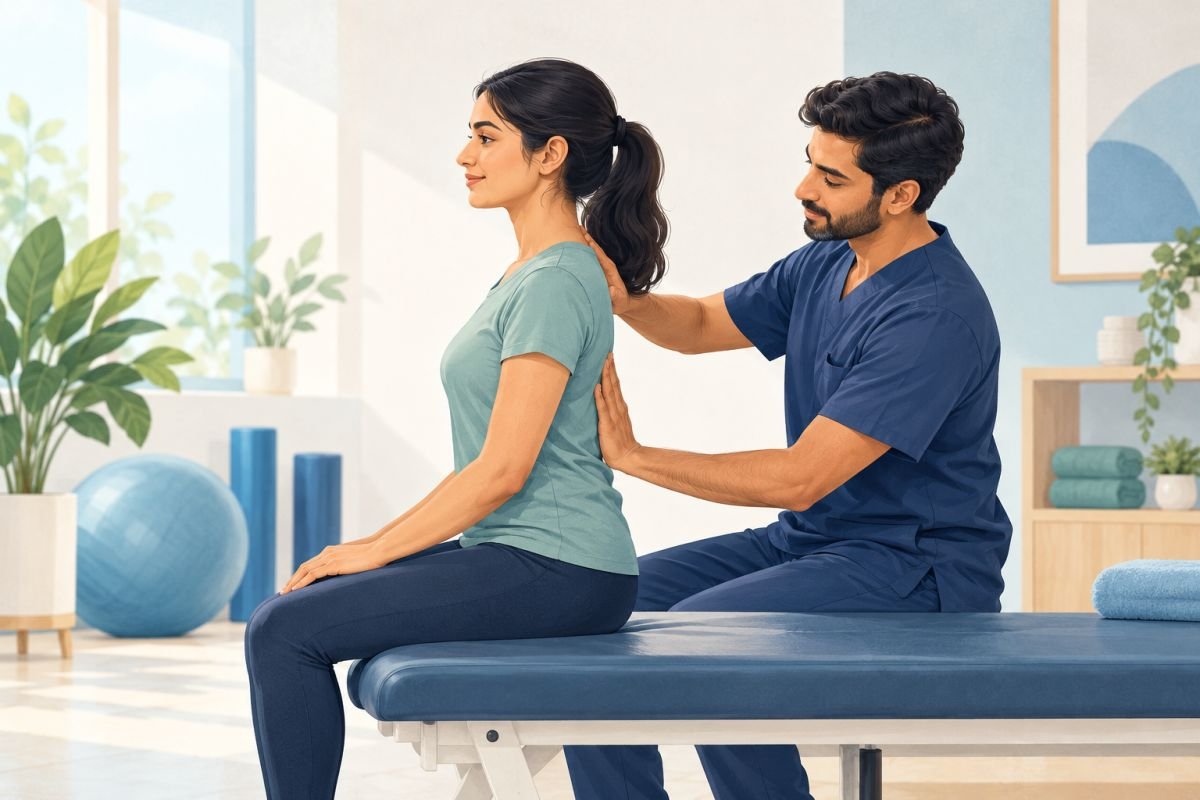
Manual therapy
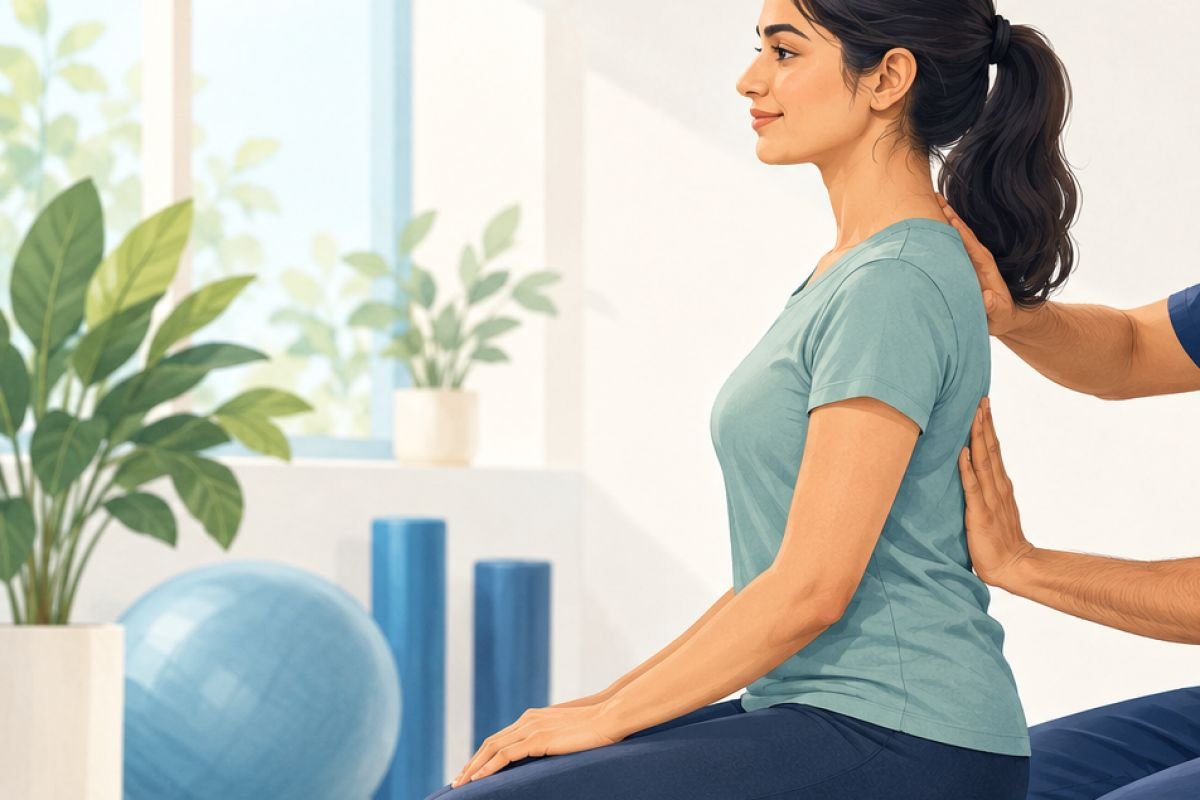
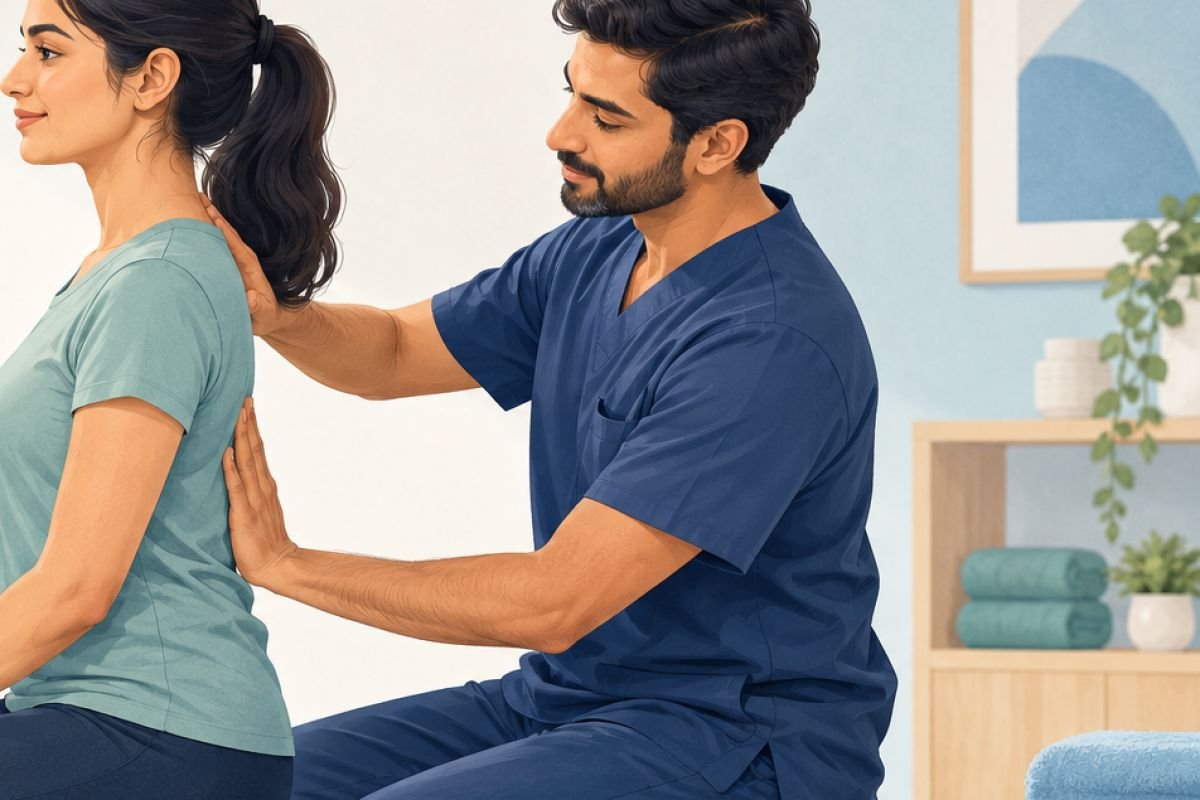
Hands-on techniques may be used alongside exercise to help ease pain and stiffness.
Posture and workstation advice
Practical changes to desk setup, sitting time and movement breaks.
Return-to-activity planning
A step-by-step plan back to work, lifting, sport or travel.
Your plan is chosen after assessment. Not every approach listed here is suitable for every person.
07Who may benefit
- Office and IT professionals with neck or back pain
- Drivers and long-distance commuters
- People with sciatica-type leg pain
- Those with age-related spinal changes seen on scans
- Anyone with recurring back pain who wants to reduce flare-ups
08Safety precautions
- Avoid prolonged bed rest – gentle activity within comfort is usually better for recovery.
- Report any change in leg or arm sensation or strength during your rehabilitation.
- If you have osteoporosis, a history of cancer or recent trauma, please tell us so techniques can be chosen safely.
09When to see a doctor first
- Numbness around the genitals, buttocks or inner thighs (saddle area)
- New difficulty passing urine, loss of bladder or bowel control
- Weakness in both legs or rapidly worsening leg weakness
- Back pain with fever, unexplained weight loss, a history of cancer, or after a significant fall or accident
10Frequently asked questions
Do I need an MRI before starting physiotherapy?
Usually not. Most back and neck pain can be assessed clinically. Scans often show age-related changes that are also common in people without pain. We will recommend imaging if your symptoms suggest it would change your management.
Should I rest until my back pain goes away?
For most people, staying gently active helps recovery more than bed rest. We will help you find movements that feel manageable and build from there.
Can physiotherapy help a slipped disc?
Many people with disc-related pain improve with conservative care, including physiotherapy. Your plan will depend on your symptoms and examination findings.
Will I need to do exercises at home?
Yes. A short home programme between sessions is one of the most important parts of spinal rehabilitation.
This page provides general information and is not a diagnosis or a substitute for an individual assessment. Recovery varies from person to person. See our medical disclaimer.