01What is lumbar disc herniation?
The discs between the vertebrae in your lower back act as shock absorbers. With age and load, the outer layer can develop small tears and the inner material can bulge or herniate. This is often called a slipped, bulging or prolapsed disc – although discs do not actually slip out of place.
Disc changes are frequently seen on MRI scans of people without any pain. When a herniation does cause symptoms, it may produce back pain, or leg pain if a nerve root is irritated.
02Common symptoms
- Lower back pain, often worse with bending and sitting
- Pain radiating into the buttock or leg (sciatica)
- Tingling or numbness in the leg or foot
- Muscle spasm and difficulty standing upright
- Pain aggravated by coughing or sneezing
03Possible causes and risk factors
- Age-related disc changes
- Repetitive bending and lifting, or a single heavy lift
- Prolonged sitting
- Smoking and low physical activity, which are associated with disc health
- Genetic factors
04How a physiotherapy assessment helps

Your assessment with Dr. Pankaj B. LokhandeBPTh, MPTh (Ortho & Sports), PhD Scholar (MUHS)
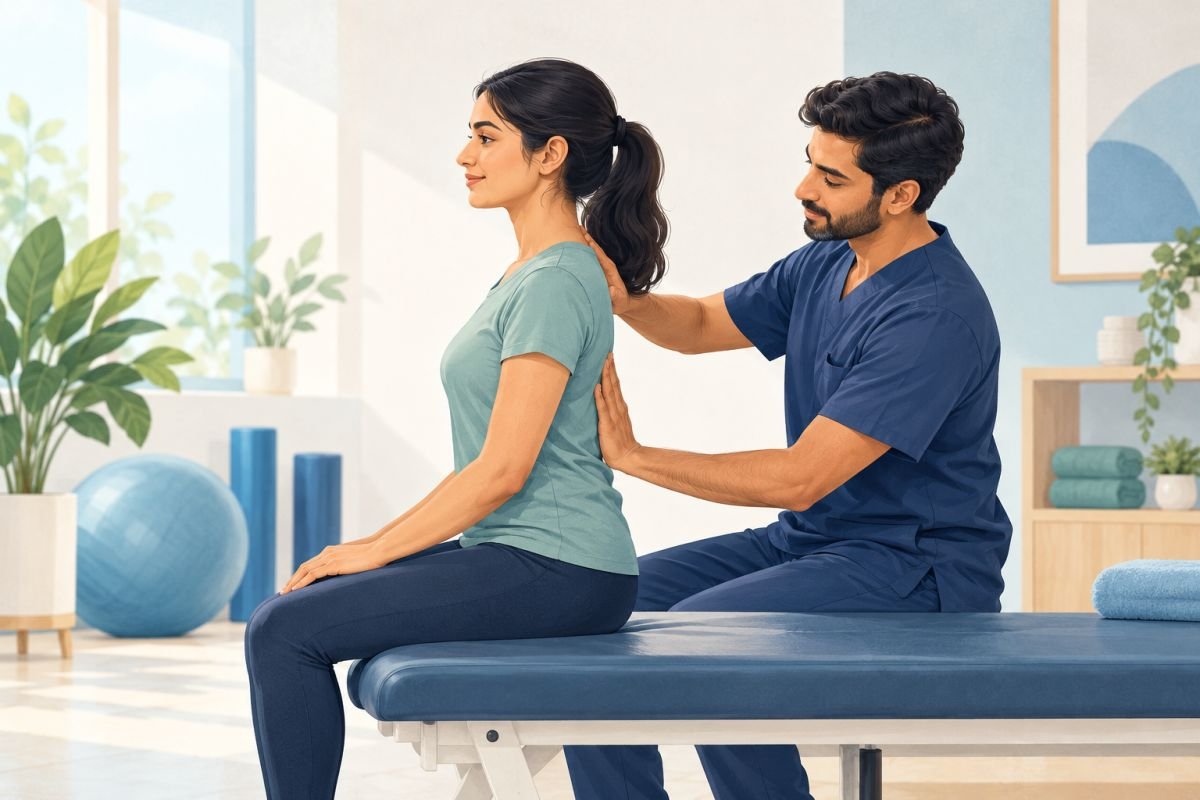
We review your scan reports if available, but focus on the clinical picture: movement patterns, positions that ease or worsen symptoms and neurological findings. This guides an individual plan.
We monitor neurological signs throughout rehabilitation and refer for medical review if they worsen.
05Rehabilitation approaches we may use
Directional movement exercises
Movements that may centralise or reduce leg symptoms for some people.
Pain education
Understanding disc healing and why staying active matters.
Graded strengthening
Trunk, hip and leg strength built up over time.
Sitting and lifting strategies
Practical modifications during recovery.
Return to work and sport
Stepwise progression with clear milestones.
Long-term fitness
Building habits that support spine health.
Your plan is chosen after assessment. Not every approach listed here is suitable for every person.
06Who may benefit
- People with MRI-confirmed disc bulges or herniations
- Those with disc-related sciatica
- Patients after disc surgery (with surgeon guidance)
07Safety precautions
- Avoid heavy lifting and long periods of sitting during acute flare-ups.
- Report increasing numbness or weakness immediately.
- Follow your surgeon’s advice if you have had spinal surgery.
08When to see a doctor first
- Numbness in the saddle area (genitals, buttocks, inner thighs)
- Bladder or bowel changes
- Weakness in both legs or rapidly worsening foot weakness
09Frequently asked questions
Can a herniated disc heal without surgery?
Many disc herniations improve with time and conservative care, and some reduce in size naturally. Surgery is considered when there are severe or progressive neurological problems or persistent symptoms despite non-surgical care.
Should I avoid bending forever?
No. Bending is a normal movement. During recovery we may temporarily modify it, then gradually reintroduce it.
Is traction helpful?
Evidence for traction in low back pain is limited. We focus on active approaches with better support.
How long does recovery take?
It varies widely between individuals. We will review progress regularly and adjust your plan.
This page provides general information and is not a diagnosis or a substitute for an individual assessment. Recovery varies from person to person. See our medical disclaimer.