01About Podiatry
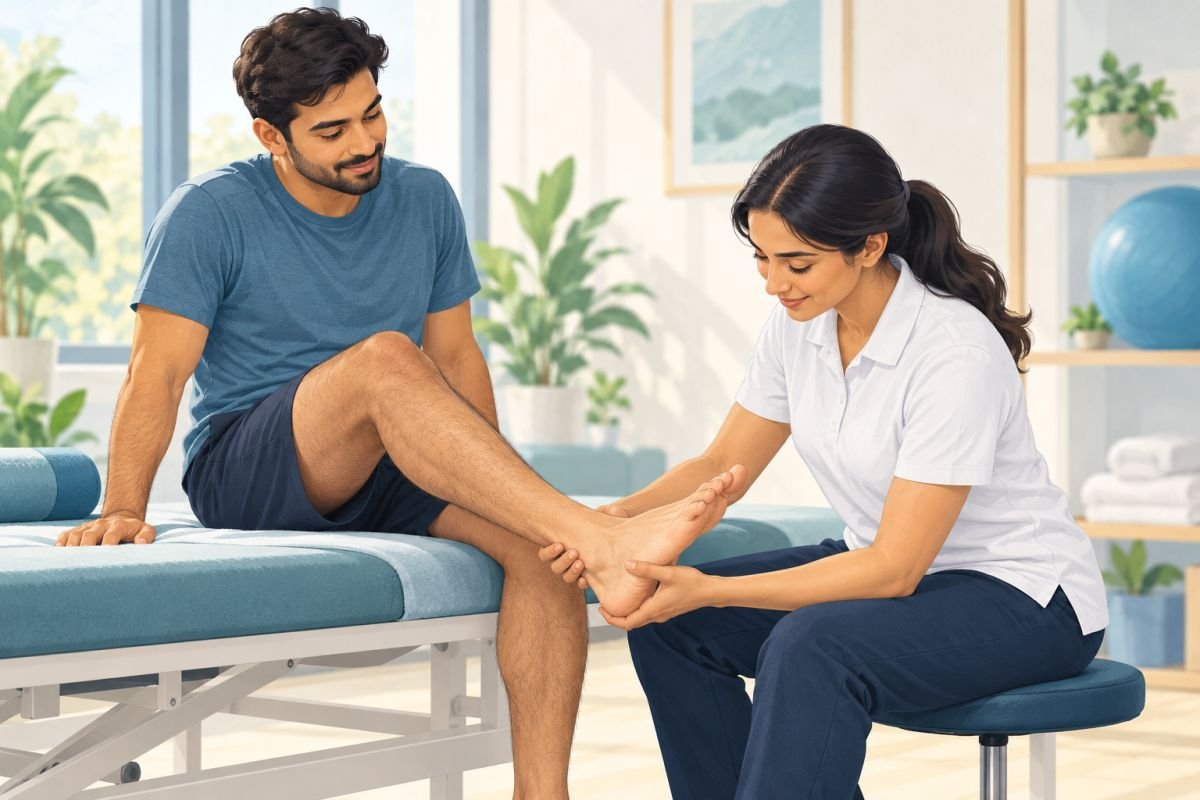
At our clinic, the podiatry service is physiotherapy-led. It focuses on the movement side of foot care: assessing foot and ankle mechanics, walking pattern, strength and flexibility, then using exercise, load advice and footwear guidance to help reduce pain and improve function.
Foot pain rarely exists in isolation. Stiff ankles, weak calf or hip muscles, sudden changes in activity and unsupportive footwear can all play a part. Looking at the whole lower limb helps us design a plan that addresses the likely contributors, not just the sore spot.
Some foot problems – such as ingrown toenails, corns, diabetic foot ulcers or nail infections – need a podiatrist, diabetologist or doctor. If your problem falls outside the scope of physiotherapy, we will tell you and suggest the right professional.
02What this service covers
- Foot pain
- Heel pain
- Plantar fasciitis
- Flat feet
- Achilles tendon problems
- Ankle sprains
- Foot & ankle mobility
- Walking (gait) assessment
- Foot biomechanics
03Common concerns we see
- Sharp heel pain with the first steps in the morning or after sitting
- Aching along the arch of the foot after standing or walking for long periods
- Pain or stiffness at the back of the heel or in the Achilles tendon
- Feet that tire quickly, or pain that spreads to the shins, knees or hips
- Recurrent ankle rolling or a feeling of instability on uneven ground
04Possible causes and risk factors
- Long hours standing on hard floors, common in retail, healthcare and teaching
- A sudden increase in walking, running or skipping
- Calf tightness or reduced ankle movement
- Footwear with little support or worn-out cushioning, or frequent barefoot walking on hard surfaces
- Increased body weight, which raises load through the feet
- Foot posture differences, such as flat feet or high arches, in some people
05How a physiotherapy assessment helps

Your assessment with Dr. Pankaj B. LokhandeBPTh, MPTh (Ortho & Sports), PhD Scholar (MUHS)
We examine the foot and ankle, assess calf and foot muscle strength, check ankle range of motion and observe how you stand, walk and, if relevant, run. We also ask about your footwear, work surfaces and activity levels.
This helps us identify which factors are most likely to be contributing and which ones we can change together.
06Rehabilitation approaches we may use
Foot and calf strengthening
Exercises for the intrinsic foot muscles and calf to improve load tolerance.
Stretching and mobility
Targeted work for the calf, plantar fascia and ankle joint where stiffness is a factor.
Walking pattern advice
Practical guidance on stride, cadence and gradual return to walking or running volumes.
Footwear guidance
Advice on choosing supportive everyday and sports shoes. Where orthotics may help, we will discuss options and refer appropriately.
Taping (where suitable)
Short-term taping may be used to offload painful tissues while strength improves.
Activity modification
Temporarily adjusting how long and how often you stand, walk or run so symptoms can settle.
Your plan is chosen after assessment. Not every approach listed here is suitable for every person.
07Who may benefit
- People with heel pain or plantar fasciitis
- Adults and teenagers with painful flat feet
- Walkers and runners with recurring foot or Achilles pain
- People who stand for long hours at work
- Anyone recovering from an ankle sprain
08Safety precautions
- If you have diabetes, poor circulation or reduced sensation in your feet, please tell us – foot care needs extra caution and medical oversight.
- Avoid self-treating with steroid injections or strong painkillers without medical advice.
- Do not walk barefoot on hard floors for long periods while heel pain is settling.
09When to see a doctor first
- A foot wound, ulcer or blister that is not healing – especially if you have diabetes
- A sudden “snap” or kick-like pain at the back of the heel with difficulty walking (possible Achilles rupture)
- Severe swelling, colour change or the foot feeling cold or numb
- Pain after a fall or impact with inability to put weight on the foot
10Frequently asked questions
Is this the same as seeing a podiatrist?
Our service is physiotherapy-led and focuses on movement, strength, walking pattern and load. Nail, skin and wound problems are best managed by a podiatrist or doctor, and we will guide you if you need one.
Do I need orthotics or insoles?
Not everyone does. Many people improve with strengthening, activity changes and suitable footwear. If we think insoles might help, we will explain why and discuss options.
How long does heel pain take to improve?
Heel pain can be slow to settle and recovery time varies widely. Consistency with exercises and load changes usually matters more than any single treatment.
Should I bring my shoes?
Yes. Please bring the shoes you wear most often for work and exercise – they tell us a lot about how your feet are being loaded.
FURTHER READING
This page provides general information and is not a diagnosis or a substitute for an individual assessment. Recovery varies from person to person. See our medical disclaimer.