01What is flat feet (pes planus)?
Flat feet (pes planus) means the arch on the inside of the foot is low or touches the ground when standing. Many children have flexible flat feet that develop an arch as they grow, and many adults have flat feet with no symptoms.
Treatment is generally only needed if flat feet cause pain, fatigue or difficulty with activities. Flat feet that develop in adulthood, especially on one side, should be assessed, as this can be related to problems with the tibialis posterior tendon.
02Common symptoms
- Aching in the arch or heel after standing or walking
- Feet that tire quickly
- Pain along the inside of the ankle
- Pain spreading to the shins, knees or hips
- A change in foot shape over time in one foot
03Possible causes and risk factors
- Inherited foot structure
- Joint hypermobility
- Weakness or dysfunction of the tibialis posterior tendon
- Increased body weight
- Previous foot or ankle injury
04How a physiotherapy assessment helps

Your assessment with Dr. Pankaj B. LokhandeBPTh, MPTh (Ortho & Sports), PhD Scholar (MUHS)
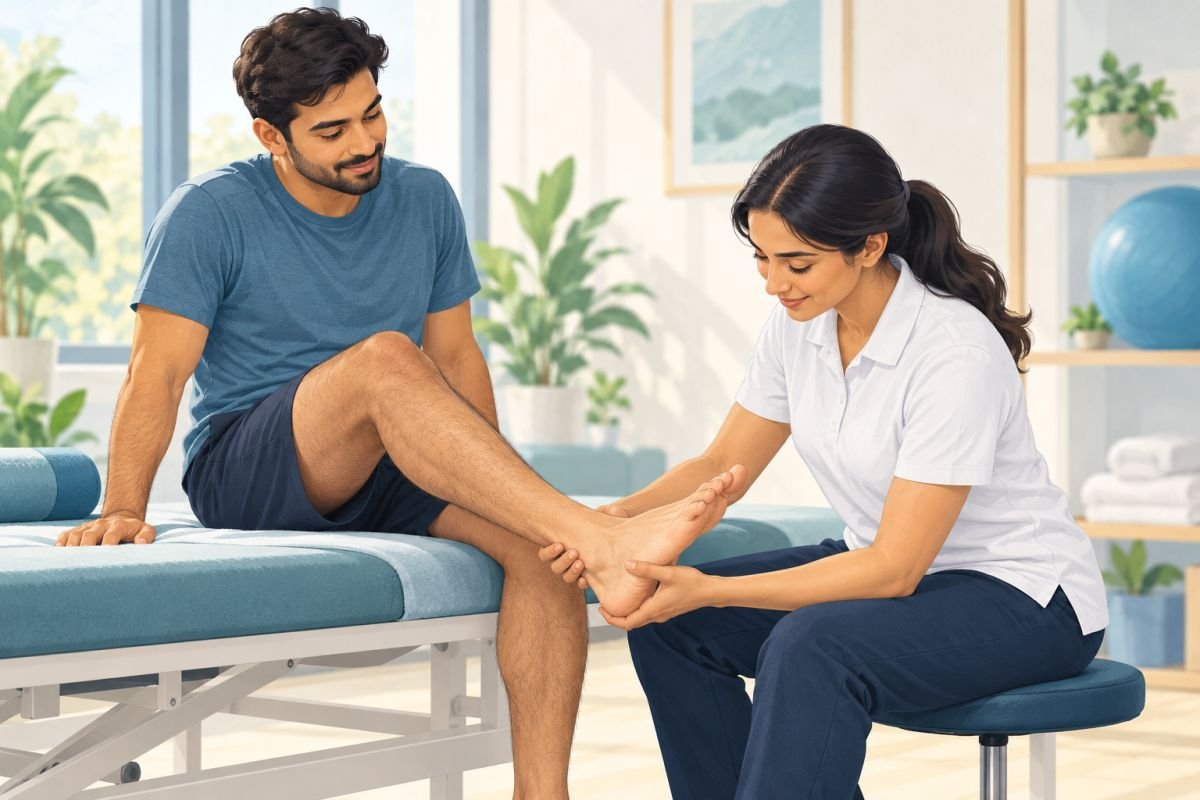
We assess foot posture standing and walking, whether the flat foot is flexible or rigid, foot and calf strength, ankle mobility and footwear. In children, we focus on whether there is pain or functional limitation.
05Rehabilitation approaches we may use
Foot strengthening
Exercises for the intrinsic foot muscles and tibialis posterior.
Calf flexibility
Stretching where tightness limits ankle movement.
Footwear guidance
Supportive shoes suited to your activities.
Orthotic advice
Discussing insoles when symptoms warrant them.
Balance training
Improving foot and ankle control.
Activity planning
Gradual return to walking, running or sport.
Your plan is chosen after assessment. Not every approach listed here is suitable for every person.
06Who may benefit
- Adults with painful flat feet
- Children and teenagers with foot pain (attending with a parent)
- Athletes with foot fatigue or pain
07Safety precautions
- Pain-free flat feet usually need no treatment.
- A flat foot that develops suddenly in adulthood should be assessed.
- Rigid flat feet in children should be reviewed by a doctor.
08When to see a doctor first
- Sudden flattening of one foot with pain on the inside of the ankle
- A stiff or rigid flat foot in a child
- Numbness or weakness in the foot
09Frequently asked questions
Does my child need insoles for flat feet?
Most children with flexible, pain-free flat feet do not need treatment. If there is pain or difficulty, an assessment is recommended.
Can exercises create an arch?
Exercises may not change foot shape significantly, but they can improve strength, control and comfort.
Do flat feet cause knee pain?
They can contribute in some people, but many people with flat feet have no knee pain.
What shoes are best for flat feet?
Shoes with good support and a firm heel counter are usually a reasonable start. We can advise based on your feet.
FURTHER READING
This page provides general information and is not a diagnosis or a substitute for an individual assessment. Recovery varies from person to person. See our medical disclaimer.