01What is cervical spondylosis?
Cervical spondylosis is a general term for age-related wear of the discs and joints in the neck. Changes such as disc narrowing and bony spurs often appear on X-rays from middle age onwards, even in people without symptoms.
When it does cause symptoms, the most common are neck pain and stiffness. Less commonly, changes can irritate a nerve root (causing arm symptoms) or, rarely, narrow the spinal canal enough to affect the spinal cord – which requires medical attention.
02Common symptoms
- Neck pain and stiffness, often worse in the morning or after inactivity
- Reduced ability to turn the head, for example when reversing a car
- Grinding or clicking sensations with movement
- Headaches at the back of the head
- Arm pain, tingling or numbness (if a nerve root is irritated)
03Possible causes and risk factors
- Natural ageing of discs and joints
- Previous neck injuries
- Occupations involving repetitive neck movements or sustained postures
- Genetic factors
04How a physiotherapy assessment helps

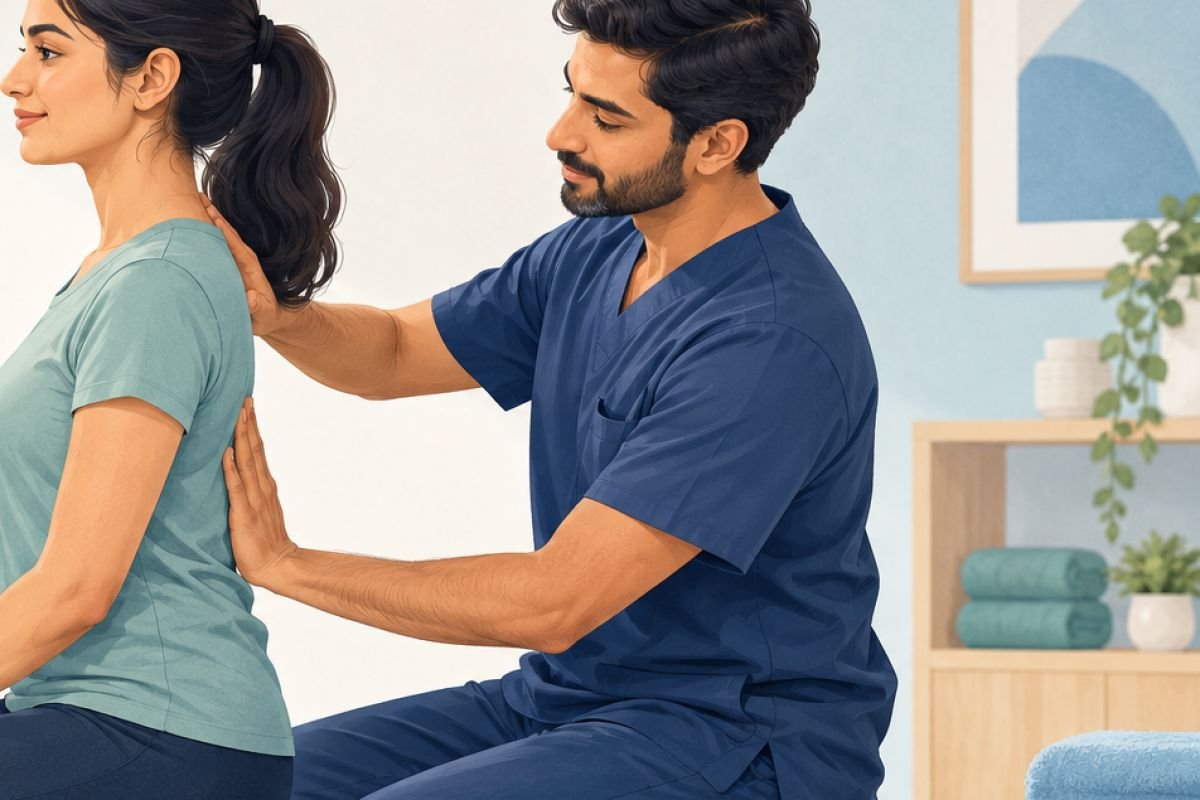
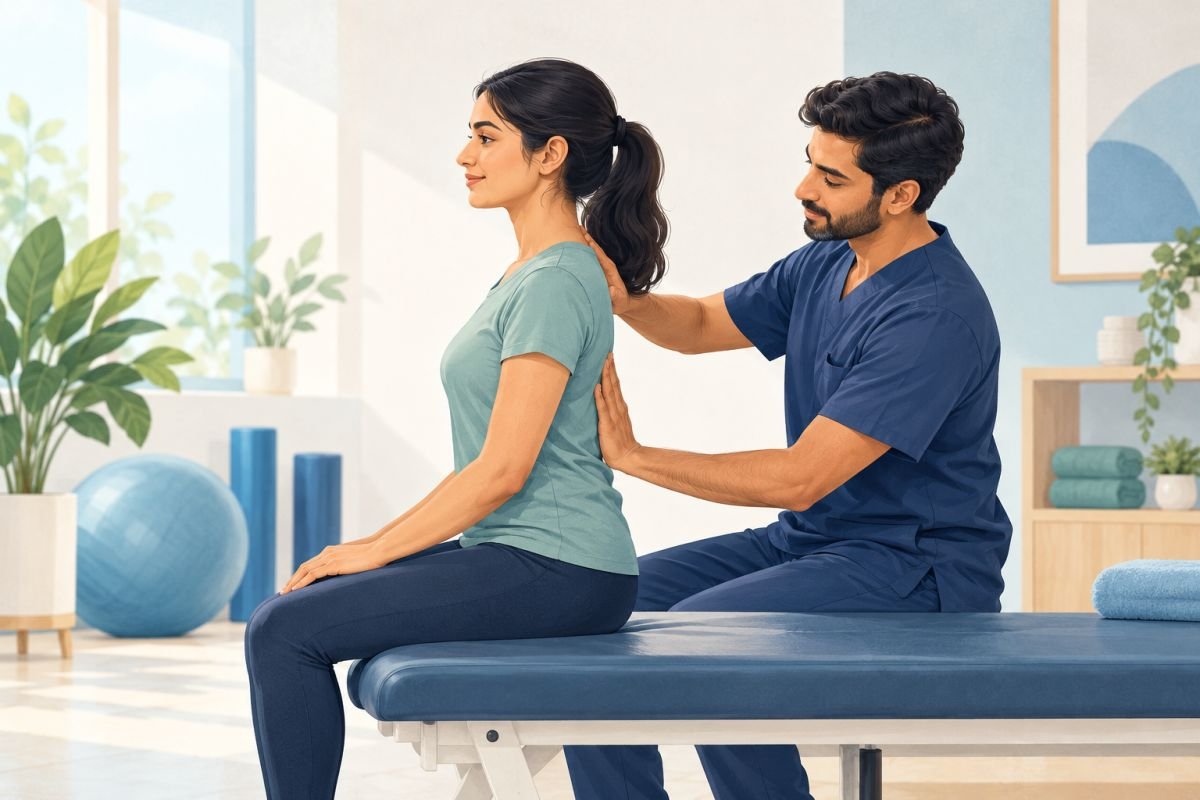
Your assessment with Dr. Pankaj B. LokhandeBPTh, MPTh (Ortho & Sports), PhD Scholar (MUHS)
We review your symptoms and any imaging, then examine neck movement, muscle endurance, upper limb nerve function and walking and hand coordination (to screen for spinal cord involvement).
It is important to remember that imaging findings and symptoms do not always match. We treat the person, not the X-ray.
05Rehabilitation approaches we may use
Range-of-motion exercises
Daily gentle movement to maintain mobility.
Neck and shoulder-girdle strengthening
Building endurance to support the neck.
Manual therapy
Gentle techniques may ease stiffness, chosen with care.
Ergonomic advice
Workstation, reading and phone-use habits.
Nerve-related symptom management
Positioning and nerve mobility where appropriate.
Self-management plan
Strategies to manage future flare-ups.
Your plan is chosen after assessment. Not every approach listed here is suitable for every person.
06Who may benefit
- Middle-aged and older adults with neck pain and stiffness
- People with arm symptoms related to neck changes (after assessment)
- Desk workers with recurring neck discomfort
07Safety precautions
- Forceful neck manipulation is avoided where it is not appropriate.
- Avoid sustained extreme neck positions, such as looking up for long periods.
- Tell us about dizziness, balance problems or hand clumsiness.
08When to see a doctor first
- Clumsiness of the hands, difficulty with buttons or handwriting
- Unsteady walking or balance problems
- Weakness in arms or legs, or changes in bladder or bowel control
- Severe pain after trauma
09Frequently asked questions
Is cervical spondylosis curable?
Age-related changes do not reverse, but symptoms can often be managed well. Many people have long periods with little or no pain.
Should I wear a cervical collar?
Collars are not usually recommended for long-term use because they can lead to stiffness and weakness. Use one only if a doctor advises it.
Can exercise make spondylosis worse?
Appropriate, guided exercise is generally helpful. We tailor exercises to your symptoms and progress gradually.
My X-ray shows spondylosis – is that why I have pain?
Possibly, but not necessarily. These changes are common in people without pain. A clinical assessment helps clarify what is driving your symptoms.
FURTHER READING
This page provides general information and is not a diagnosis or a substitute for an individual assessment. Recovery varies from person to person. See our medical disclaimer.