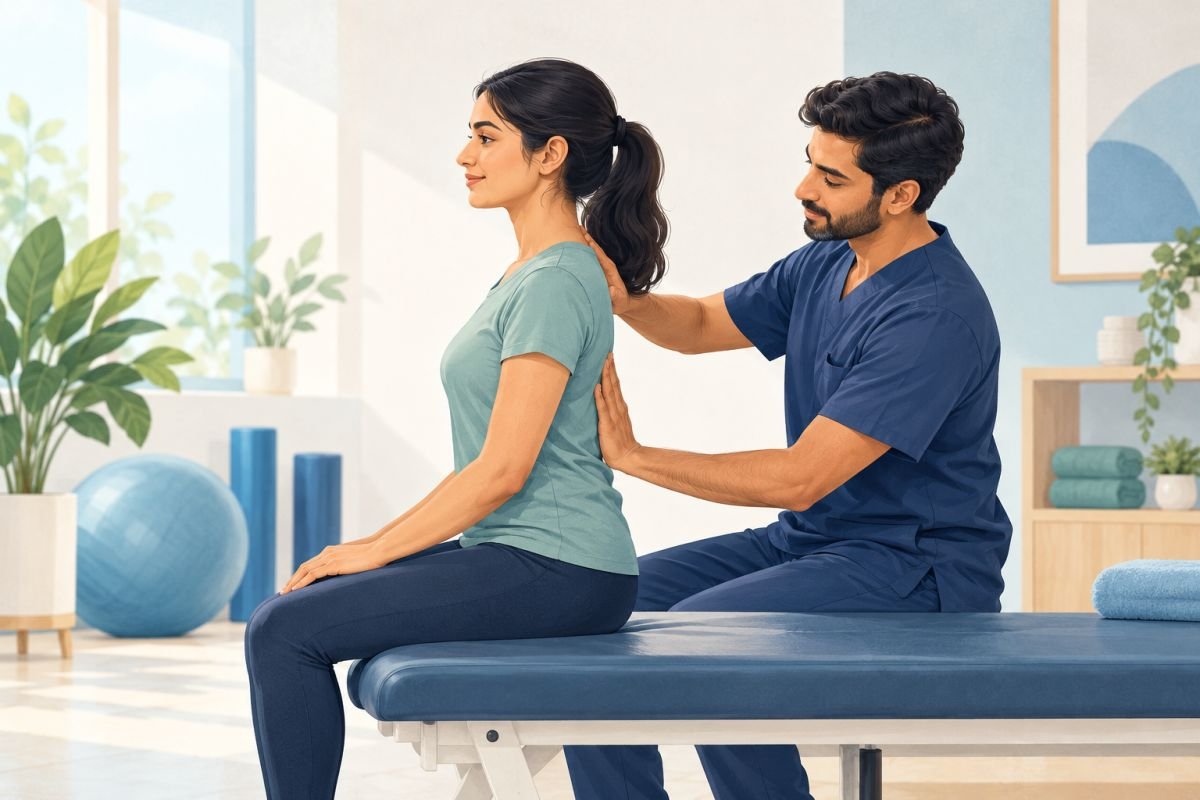
01What is shoulder pain?
Shoulder pain can come from the rotator cuff tendons, the joint itself, the capsule, the bursa, or be referred from the neck. Rotator cuff-related pain – sometimes called impingement – is one of the most common causes, especially in people who lift or reach overhead.
Strength-based rehabilitation is a cornerstone of care for many shoulder conditions, and it is often as effective as more invasive options for rotator cuff-related pain.
02Common symptoms
- Pain lifting the arm, particularly between shoulder and head height
- Pain lying on the shoulder at night
- Weakness when lifting or reaching
- A feeling of the shoulder slipping or being unstable
- Pain spreading down the outer upper arm
03Possible causes and risk factors
- Rotator cuff tendon overload or degeneration
- Sudden increase in overhead activity or lifting
- Shoulder dislocation or instability
- Frozen shoulder
- Neck problems referring pain to the shoulder
04How a physiotherapy assessment helps

Your assessment with Dr. Pankaj B. LokhandeBPTh, MPTh (Ortho & Sports), PhD Scholar (MUHS)
We assess shoulder and neck movement, rotator cuff strength, shoulder-blade control and specific tests to identify the likely source of pain.
If we suspect a significant tear, dislocation or fracture, we will recommend imaging and orthopaedic review.
05Rehabilitation approaches we may use
Rotator cuff strengthening
Progressive loading of the shoulder muscles.
Shoulder-blade (scapular) control
Improving how the shoulder blade moves and supports the arm.
Mobility work
Restoring range of motion where restricted.
Activity modification
Temporarily adjusting overhead work or training.
Manual therapy
Used alongside exercise when helpful.
Post-surgery rehabilitation
Following your surgeon’s protocol after repair or stabilisation.
Your plan is chosen after assessment. Not every approach listed here is suitable for every person.
06Who may benefit
- Gym users and overhead athletes (cricket, badminton, swimming)
- People with rotator cuff-related pain
- Patients after shoulder surgery
- Office workers with shoulder and neck discomfort
07Safety precautions
- Avoid repeated painful overhead movements during flare-ups.
- After surgery, follow sling and movement restrictions strictly.
- Tell us about any previous dislocations.
08When to see a doctor first
- Left shoulder or arm pain with chest pain, breathlessness or sweating – call emergency services
- Sudden inability to lift the arm after a fall or injury
- A visibly deformed shoulder after injury
- Fever with a hot, swollen shoulder
09Frequently asked questions
Can I continue going to the gym?
Often yes, with modifications. We help adjust exercises so you can keep training while the shoulder recovers.
Do rotator cuff tears always need surgery?
No. Many tears, especially degenerative ones, are managed successfully with rehabilitation. Larger or traumatic tears may need surgical opinion.
Why does my shoulder hurt more at night?
Night pain is common with many shoulder conditions. Positioning advice can help.
Could my shoulder pain come from my neck?
Yes. We assess the neck as part of every shoulder examination.
FURTHER READING
This page provides general information and is not a diagnosis or a substitute for an individual assessment. Recovery varies from person to person. See our medical disclaimer.