01What is neck pain?
Neck pain refers to pain or stiffness in the cervical spine – the seven vertebrae, joints, discs and muscles that support your head. It may stay in the neck or spread to the shoulders, between the shoulder blades or, in some cases, down the arm.
Long hours at screens, mobile phone use and stress commonly contribute. Most neck pain is not due to serious disease, but it can still be very limiting.
02Common symptoms
- Stiffness and reduced ability to turn or tilt the head
- Aching across the neck and top of the shoulders
- Headaches starting at the base of the skull
- Pain worse after desk work, phone use or driving
- Pain, tingling or numbness spreading into an arm (may indicate nerve irritation)
03Possible causes and risk factors
- Sustained positions at screens or looking down at phones
- Sleeping in an awkward position
- Muscle tension linked to stress
- Age-related joint and disc changes (cervical spondylosis)
- Minor injuries, including whiplash from road traffic accidents
04How a physiotherapy assessment helps

Your assessment with Dr. Pankaj B. LokhandeBPTh, MPTh (Ortho & Sports), PhD Scholar (MUHS)
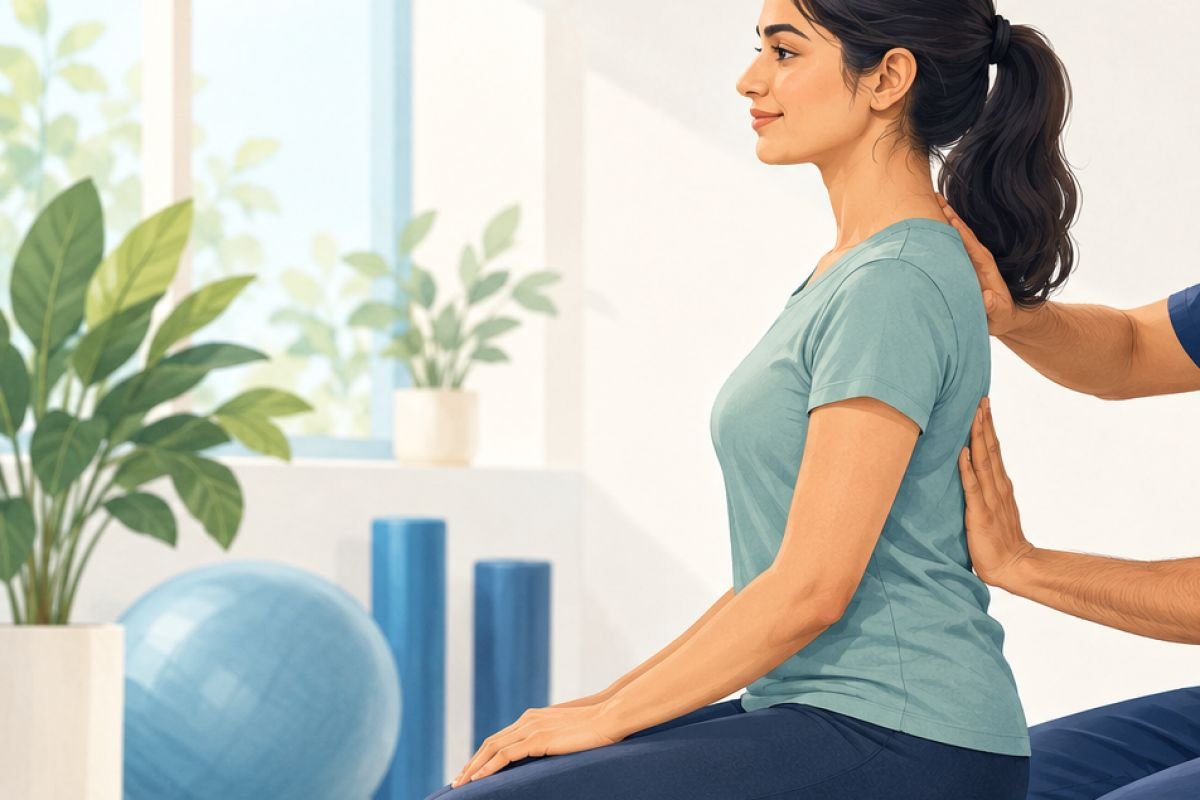
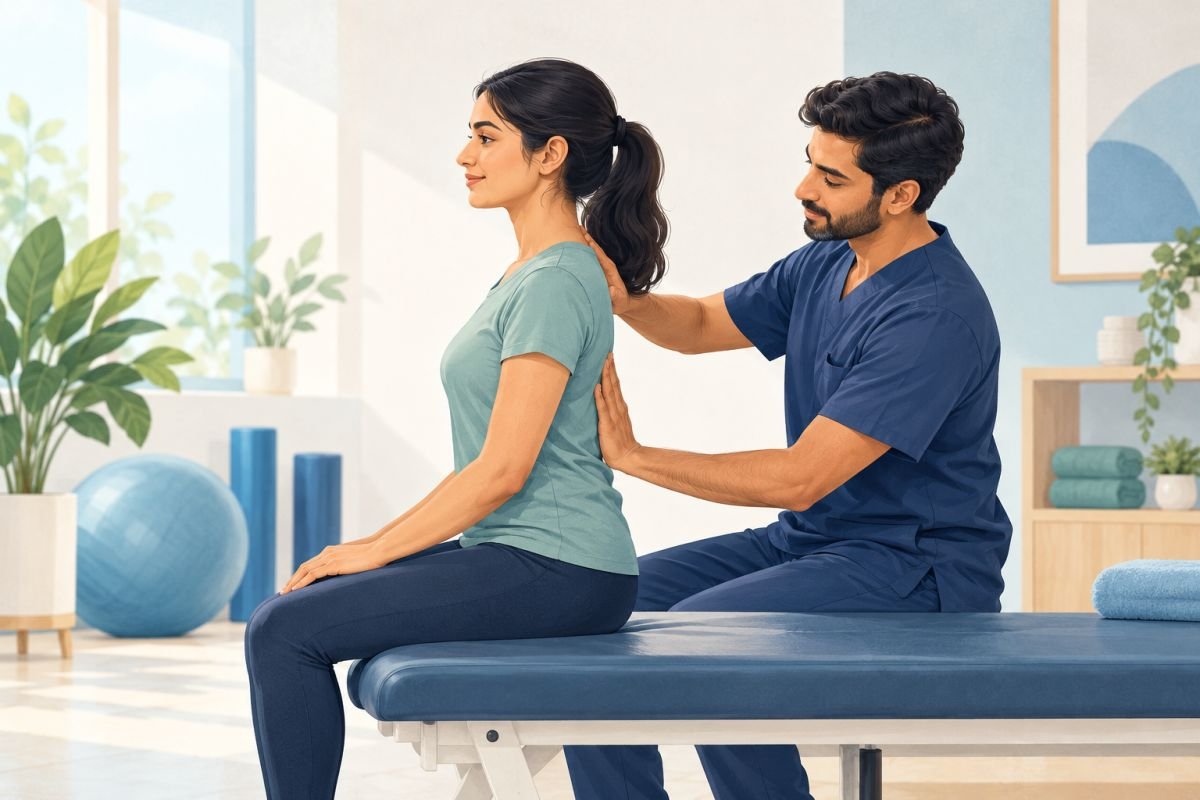
We assess neck and upper back movement, shoulder function, muscle endurance and your work and sleep habits. If you have arm symptoms, we check nerve function – sensation, reflexes and strength.
We also screen for signs that need medical review, particularly after trauma or if you have dizziness or other neurological symptoms.
05Rehabilitation approaches we may use
Mobility exercises
Gentle, regular neck and upper back movements to restore range.
Deep neck and shoulder strengthening
Endurance exercises that support the neck through the day.
Manual therapy
May be used alongside exercise to ease pain and stiffness.
Workstation and phone habits
Screen height, chair setup, laptop use and movement breaks.
Sleep positioning
Pillow and position advice for comfortable rest.
Headache management
Strategies for neck-related headaches.
Your plan is chosen after assessment. Not every approach listed here is suitable for every person.
06Who may benefit
- Office and IT professionals
- Students with long study hours
- People with neck-related headaches
- Those recovering from minor whiplash injuries (after medical clearance)
07Safety precautions
- Avoid forcing painful end-range movements.
- Neck collars are generally not recommended for routine neck pain except on medical advice.
- Manual techniques are chosen carefully after screening, particularly for neck manipulation.
08When to see a doctor first
- Neck pain after a significant fall, accident or head injury
- Weakness, clumsiness or difficulty walking, or changes in coordination of the hands
- Severe headache with fever, neck stiffness, rash or sensitivity to light
- Dizziness, double vision, difficulty speaking or swallowing
09Frequently asked questions
Is my posture causing my neck pain?
Posture can contribute, but there is no single “correct” posture. Changing position regularly and building strength usually matters more than sitting perfectly upright.
Which pillow is best for neck pain?
There is no one best pillow. A pillow that keeps your neck roughly in line with your spine in your usual sleeping position is a reasonable starting point.
Can neck pain cause arm pain?
Yes. Irritation of a nerve in the neck can cause pain, tingling or numbness in the arm. This should be assessed.
How quickly will my neck pain improve?
Many people notice improvement within days to weeks. If symptoms persist, a structured exercise programme can help.
FURTHER READING
This page provides general information and is not a diagnosis or a substitute for an individual assessment. Recovery varies from person to person. See our medical disclaimer.