01What is knee osteoarthritis?
Osteoarthritis (OA) is a condition affecting the whole joint, including cartilage, bone, ligaments and surrounding muscles. It is more than “wear and tear” – joints are constantly repairing, and the balance between damage and repair can be influenced by activity, strength and weight.
Clinical guidelines, including those from the UK’s National Institute for Health and Care Excellence (NICE), recommend therapeutic exercise and education as core treatments for osteoarthritis, alongside weight management where relevant.
02Common symptoms
- Knee pain that worsens with activity and eases with rest
- Morning stiffness lasting less than about 30 minutes
- Difficulty with stairs, squatting and getting up from low chairs
- Grinding or crackling sensations
- Occasional swelling
03Possible causes and risk factors
- Increasing age
- Higher body weight
- Previous knee injury or surgery
- Muscle weakness, particularly of the quadriceps
- Genetic factors and being female
04How a physiotherapy assessment helps

Your assessment with Dr. Pankaj B. LokhandeBPTh, MPTh (Ortho & Sports), PhD Scholar (MUHS)
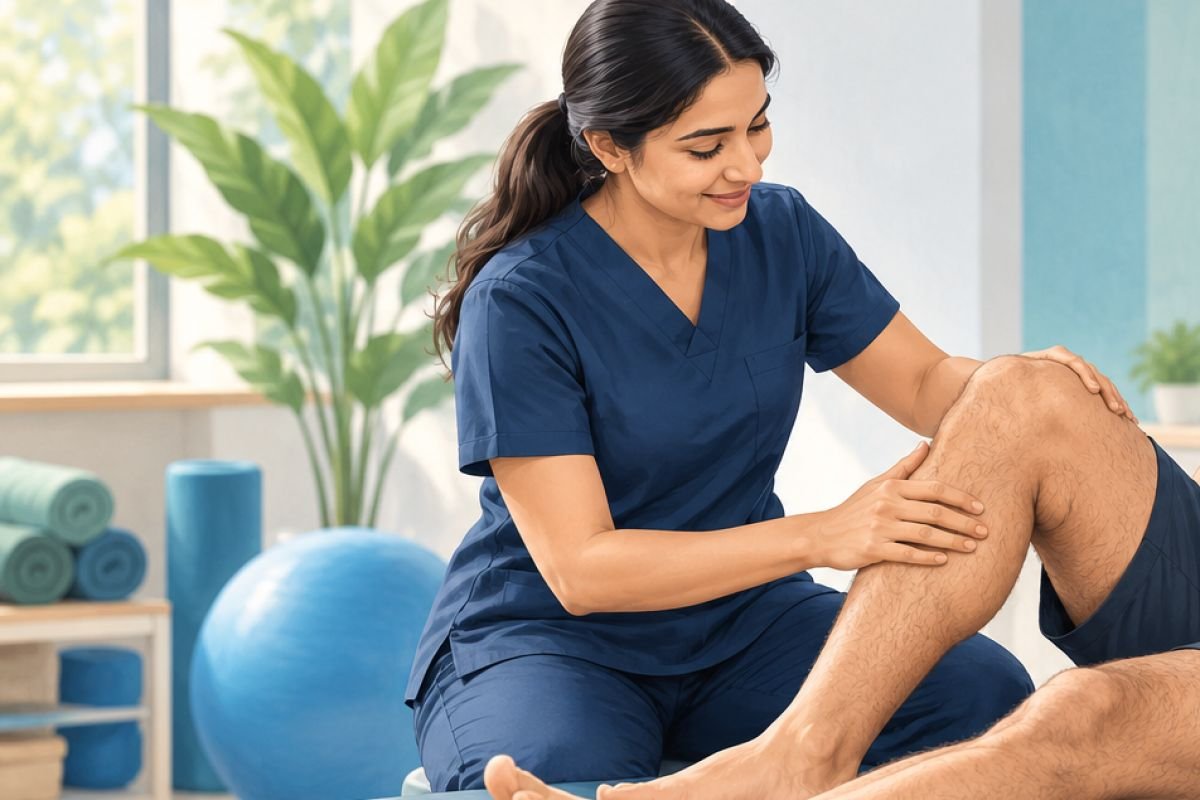
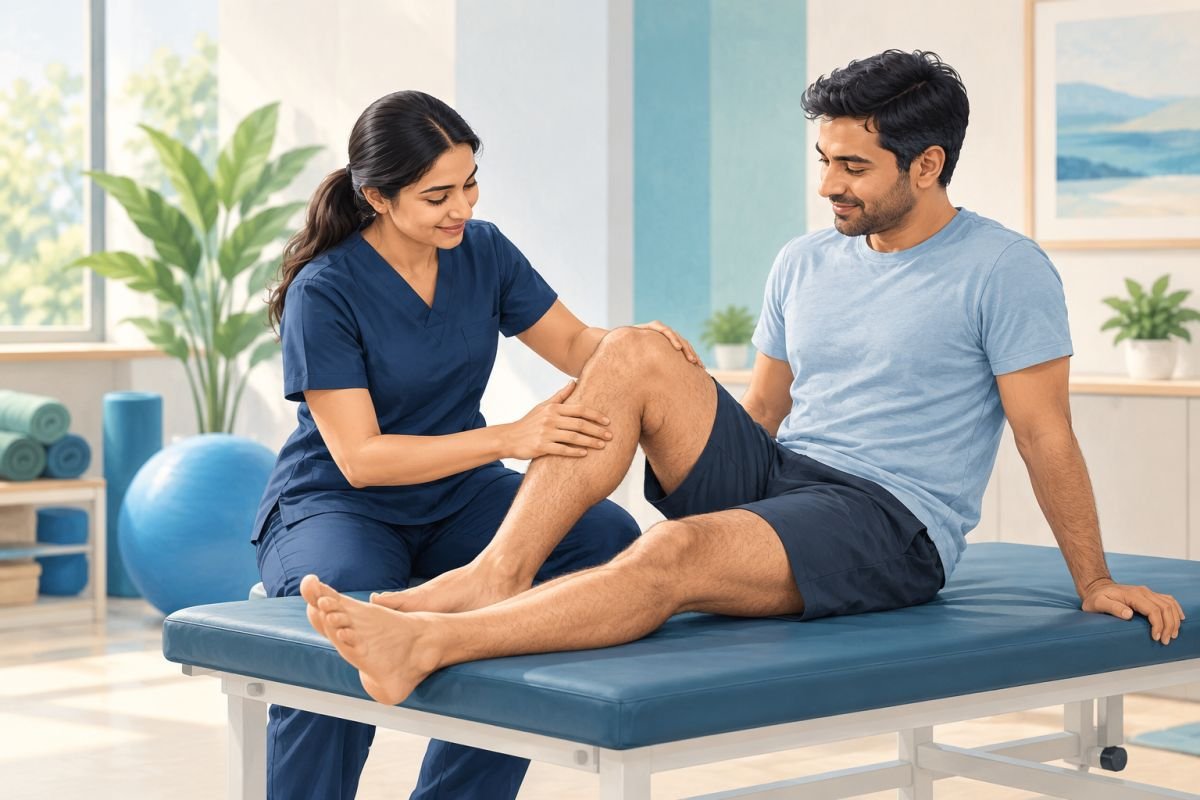
Knee OA can often be diagnosed clinically in people over 45 with typical symptoms, without the need for X-rays. We assess strength, range of motion, walking and functional tasks, and talk about your goals.
If an X-ray or orthopaedic opinion would help – for example, when considering surgery – we will advise you.
05Rehabilitation approaches we may use
Strengthening exercise
Progressive quadriceps, hip and calf strengthening.
Aerobic activity
Walking, cycling or water-based exercise, built up gradually.
Education
Understanding OA, pacing and managing flare-ups.
Weight management support
Guidance and signposting where weight affects symptoms.
Walking aids and footwear
Advice when helpful for comfort and confidence.
Manual therapy
May be used alongside exercise, not instead of it.
Your plan is chosen after assessment. Not every approach listed here is suitable for every person.
06Who may benefit
- Adults diagnosed with knee osteoarthritis
- People considering or waiting for knee replacement
- Those who want to delay or avoid surgery through conservative care
07Safety precautions
- Some exercise-related discomfort is acceptable if it settles within 24 hours.
- Plan activity around flare-ups rather than stopping completely.
- Medications and injections are decisions for your doctor.
08When to see a doctor first
- A hot, red, very swollen knee or fever
- Sudden severe pain or locking
- Rapidly worsening pain or deformity
09Frequently asked questions
Will exercise damage my arthritic knee?
Appropriate exercise does not usually harm arthritic joints and is recommended as a core treatment. We tailor it to your symptoms.
Can physiotherapy help me avoid knee replacement?
For some people, exercise and lifestyle changes reduce symptoms enough to delay or avoid surgery. For others, surgery is the right choice. Pre-operative strength also supports recovery.
Is walking good for knee arthritis?
Yes, for most people. Start with manageable distances and build gradually.
Do supplements help?
Evidence for supplements such as glucosamine is mixed. Discuss them with your doctor.
FURTHER READING
This page provides general information and is not a diagnosis or a substitute for an individual assessment. Recovery varies from person to person. See our medical disclaimer.