01What is rehabilitation after total knee replacement?
Total knee replacement (TKR) replaces the damaged surfaces of the knee joint with artificial components. It is commonly performed for advanced osteoarthritis that no longer responds to non-surgical treatment.
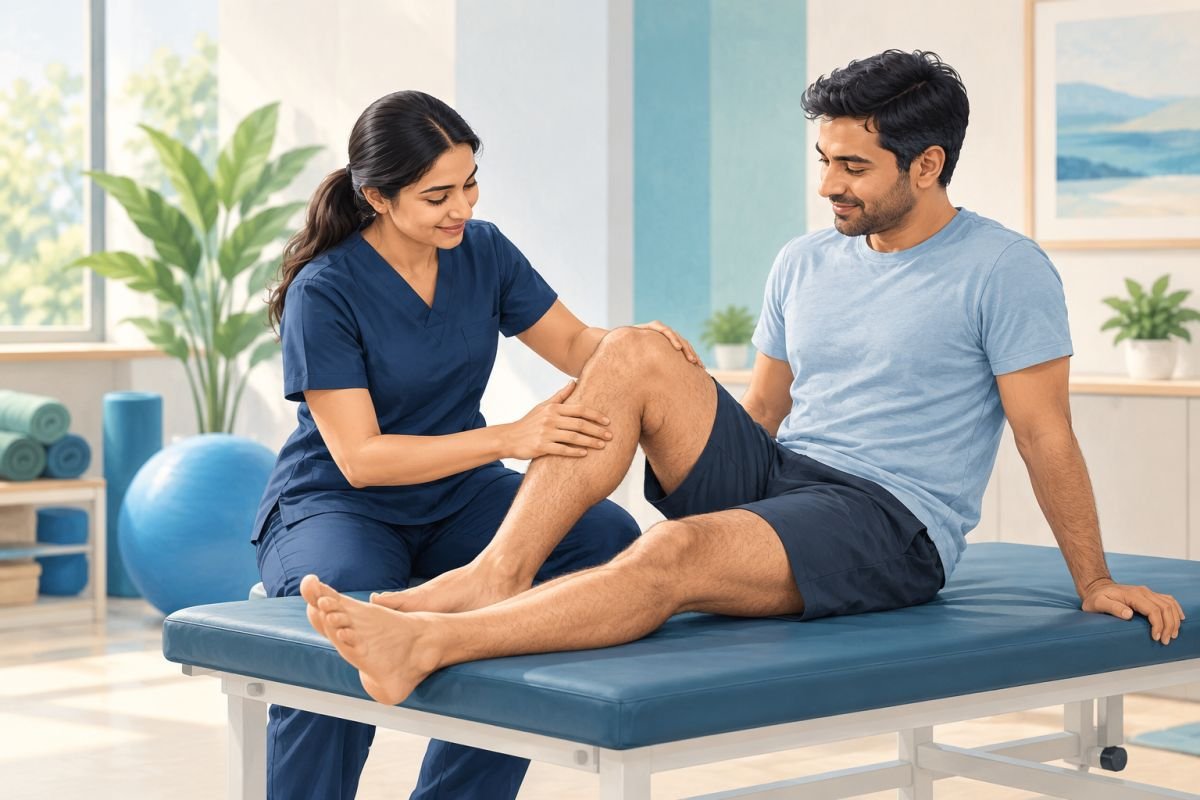
After surgery, the main goals are to regain knee bending and straightening, rebuild quadriceps strength, walk safely and return to daily activities. Stiffness can develop if movement is not regained early, which is why consistent exercise matters.
02Common challenges after knee replacement
- Difficulty bending or fully straightening the knee
- Swelling and warmth that can last for weeks to months
- Weak thigh muscles
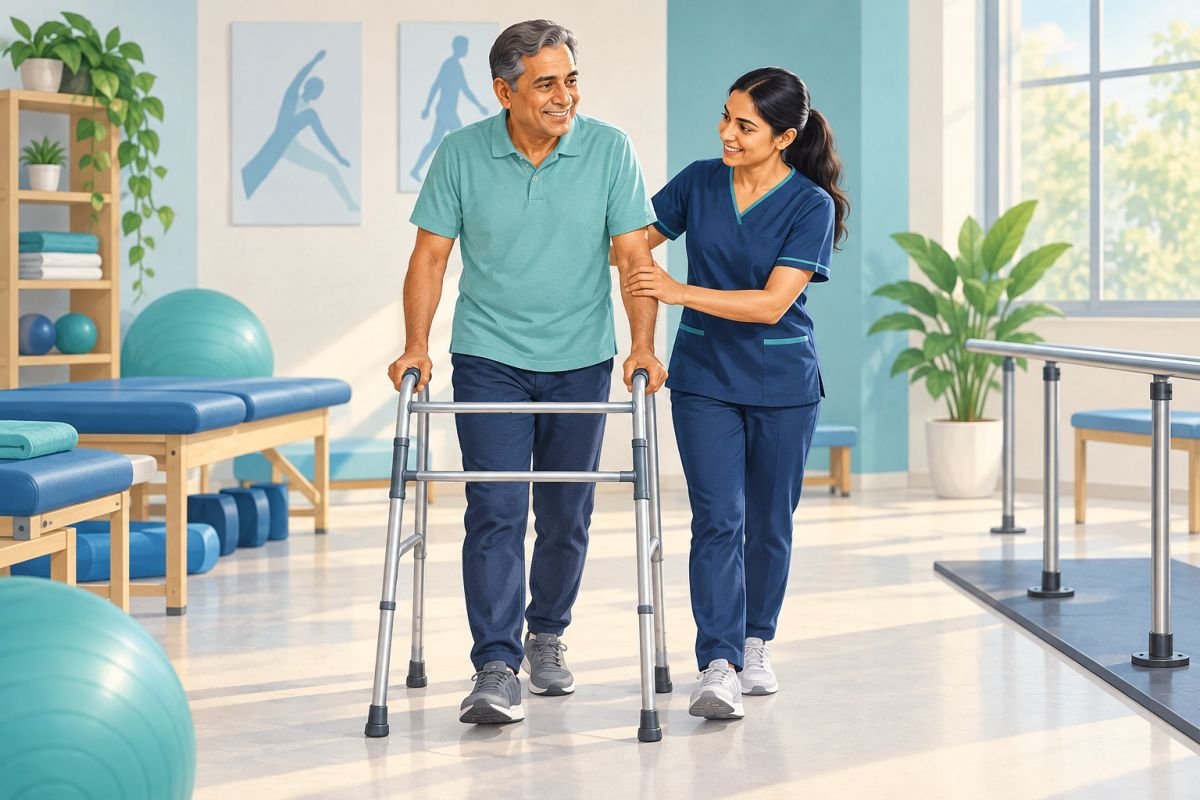
- Needing a walker or stick initially
- Difficulty with stairs, getting into cars and sitting cross-legged
03How a physiotherapy assessment helps

Your assessment with Dr. Pankaj B. LokhandeBPTh, MPTh (Ortho & Sports), PhD Scholar (MUHS)
We review your discharge notes and surgeon’s instructions, then measure knee range of motion, swelling, strength and walking. We set short-term goals such as walking with one stick or managing stairs.
04Rehabilitation approaches we may use
Range-of-motion exercises
Daily bending and straightening exercises.
Quadriceps activation and strengthening
From simple exercises to functional strengthening.
Walking re-education
Progressing from walker to stick to independent walking where possible.
Swelling management
Elevation, ice where advised and activity pacing.
Balance training
Restoring steadiness and confidence.
Return to daily activities
Stairs, car transfers, household tasks and leisure.
Your plan is chosen after assessment. Not every approach listed here is suitable for every person.
05Who may benefit
- Patients after total or partial knee replacement
- People preparing for surgery (pre-operative strengthening)
- Patients experiencing stiffness after surgery
06Safety precautions
- Follow your surgeon’s specific instructions, including any restrictions.
- Take prescribed pain relief as directed so you can complete exercises.
- Some swelling and warmth are normal for weeks or months; sudden changes should be checked.
07When to see a doctor first
- Fever, increasing redness or discharge from the wound
- Calf pain or swelling, sudden breathlessness or chest pain
- Sudden increase in pain or inability to bear weight
08Frequently asked questions
When can I start physiotherapy after knee replacement?
Physiotherapy usually begins in hospital within a day or so. Outpatient rehabilitation continues after discharge as advised by your surgeon.
How much should my knee bend?
Targets vary, but enough bend for stairs, sitting and getting up from chairs is a key goal. We will track your progress.
When can I walk without support?
It varies by person. Many people progress from a walker to a stick and then to independent walking over several weeks.
Will I be able to sit cross-legged or squat?
Deep bending varies after knee replacement. Discuss specific activities with your surgeon.
FURTHER READING
This page provides general information and is not a diagnosis or a substitute for an individual assessment. Recovery varies from person to person. See our medical disclaimer.