01What is meniscus tear?
The menisci are two C-shaped cartilage pads inside the knee that help absorb load and stabilise the joint. Tears can happen suddenly with a twisting injury in younger people, or gradually as part of age-related change in older adults.
For degenerative tears in middle-aged and older adults, research has shown that exercise therapy is often as effective as keyhole surgery for many people. Some tears – especially those causing the knee to lock – may need surgery.
02Common symptoms
- Pain along the inside or outside of the knee joint
- Swelling, often developing over a day or so
- Catching, clicking or locking
- Pain with twisting, squatting or deep bending
- Feeling the knee may give way
03Possible causes and risk factors
- Twisting on a bent, weight-bearing knee
- Deep squatting or kneeling under load
- Age-related degeneration of the meniscus
- Associated ligament injuries such as ACL tears
04How a physiotherapy assessment helps

Your assessment with Dr. Pankaj B. LokhandeBPTh, MPTh (Ortho & Sports), PhD Scholar (MUHS)
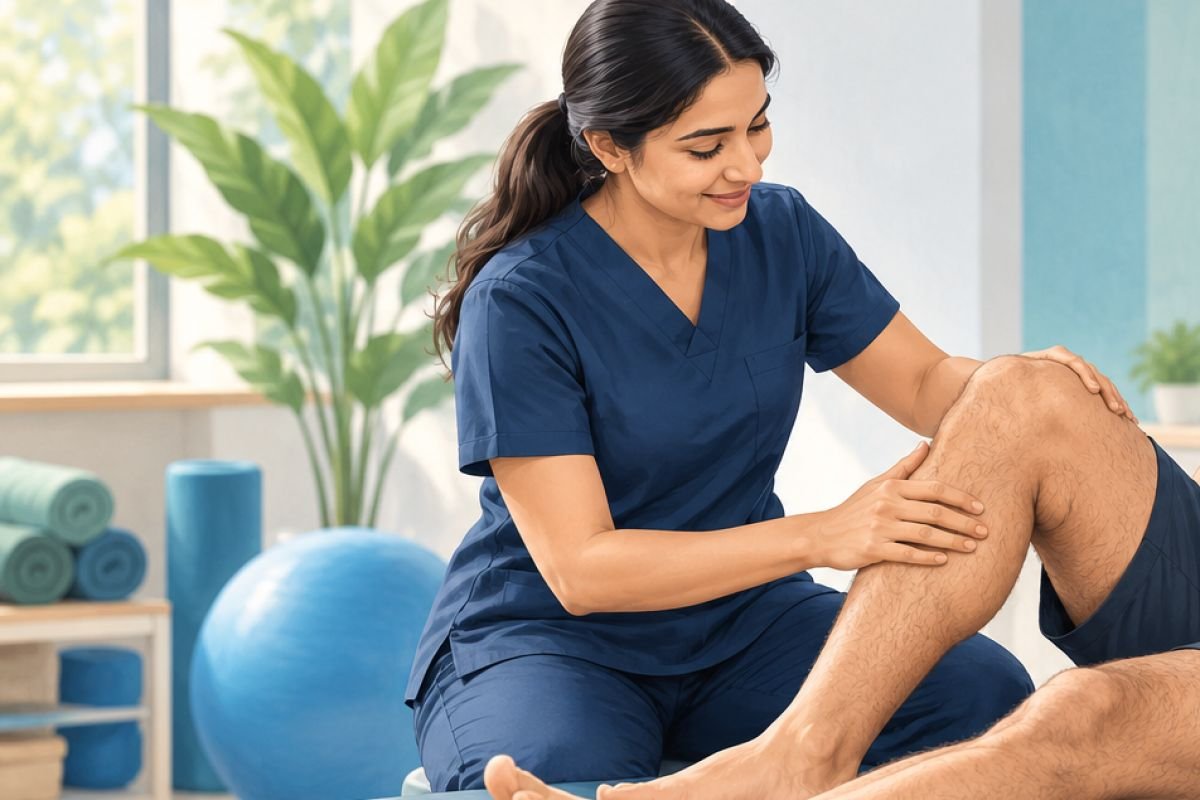
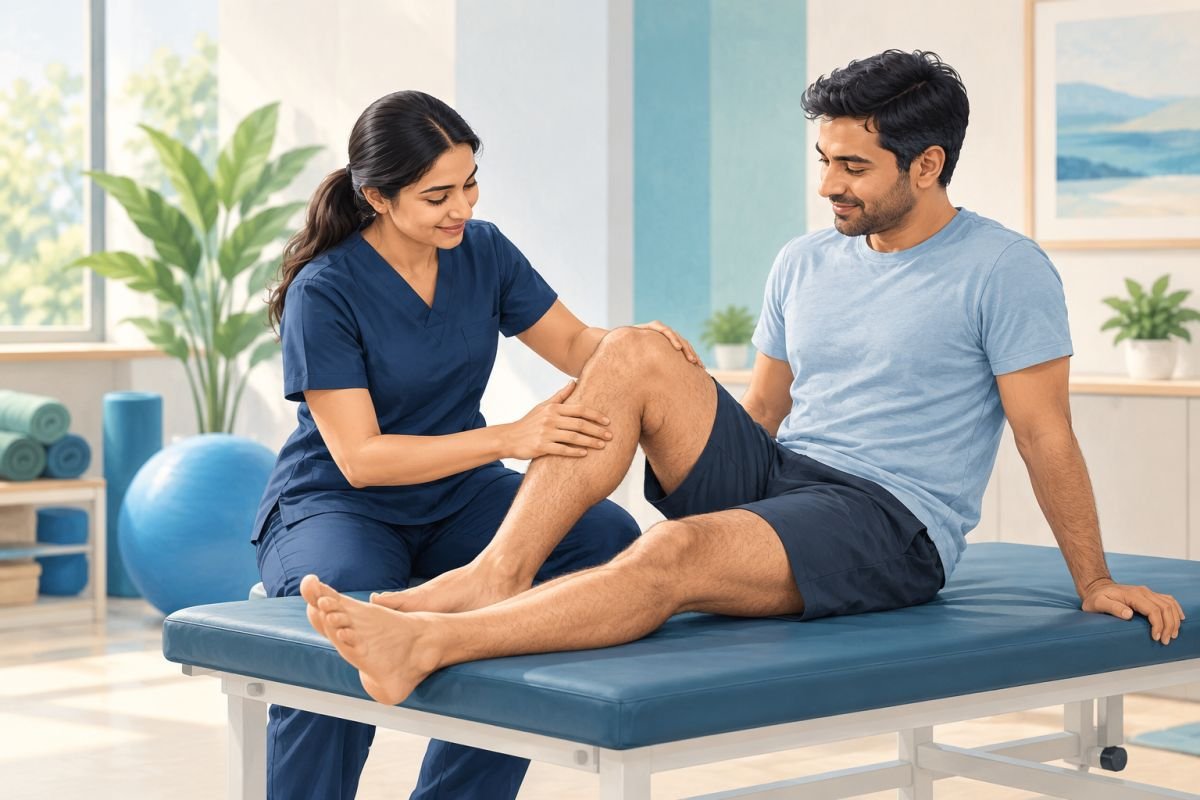
We assess joint-line tenderness, range of motion, swelling and provocation tests, and check other knee structures. If the knee is locking or symptoms suggest a significant tear, we will advise orthopaedic review.
After meniscal repair surgery, rehabilitation follows specific weight-bearing and bending restrictions set by your surgeon.
05Rehabilitation approaches we may use
Swelling and pain management
Graded activity, positioning and ice where helpful.
Range-of-motion restoration
Within comfort or surgical limits.
Progressive strengthening
Quadriceps, hamstrings, hips and calves.
Balance and control
Single-leg stability and movement control.
Activity modification
Temporarily reducing deep squats and twisting.
Return to activity
Staged return to work, sport and exercise.
Your plan is chosen after assessment. Not every approach listed here is suitable for every person.
06Who may benefit
- Younger athletes with traumatic meniscus tears
- Middle-aged and older adults with degenerative tears
- Patients after meniscectomy or meniscal repair
07Safety precautions
- Avoid deep squatting and twisting until advised.
- After meniscal repair, strictly follow your surgeon’s restrictions.
- Report any locking episodes.
08When to see a doctor first
- A knee locked and unable to straighten
- Severe swelling and inability to bear weight
- Fever or signs of infection after surgery
09Frequently asked questions
Does every meniscus tear need surgery?
No. Many tears, especially degenerative ones, are managed with exercise therapy. Surgery is considered for mechanical locking, some repairable tears or persistent symptoms.
Can a meniscus heal?
The outer part of the meniscus has a blood supply and may heal; the inner part has less. Even when tissue does not fully heal, symptoms often improve with strengthening.
How long does rehab take?
This depends on the tear and treatment. Repairs typically take longer than non-surgical management or partial removal.
Can I squat with a meniscus tear?
Shallow squats are often introduced early; deeper loaded squats come later, depending on symptoms and any surgery.
This page provides general information and is not a diagnosis or a substitute for an individual assessment. Recovery varies from person to person. See our medical disclaimer.