01What is anterior cruciate ligament (ACL) injury?
The anterior cruciate ligament (ACL) is one of the main ligaments that stabilises the knee, particularly during twisting, cutting and landing. ACL injuries often happen without contact – for example, when changing direction or landing awkwardly in football, kabaddi, basketball or badminton.
Treatment may involve surgical reconstruction followed by rehabilitation, or rehabilitation alone. The best choice depends on knee stability, your sport and goals, and any other injuries, and should be made with an orthopaedic surgeon.
02Common symptoms
- A pop or snapping sensation at the time of injury
- Rapid swelling within hours
- Knee feeling unstable or giving way, especially when turning
- Pain and difficulty continuing to play
- Loss of full range of motion
03Possible causes and risk factors
- Sudden change of direction or pivoting
- Awkward landing from a jump
- Sudden stopping
- Direct contact to the knee
04How a physiotherapy assessment helps

Your assessment with Dr. Pankaj B. LokhandeBPTh, MPTh (Ortho & Sports), PhD Scholar (MUHS)
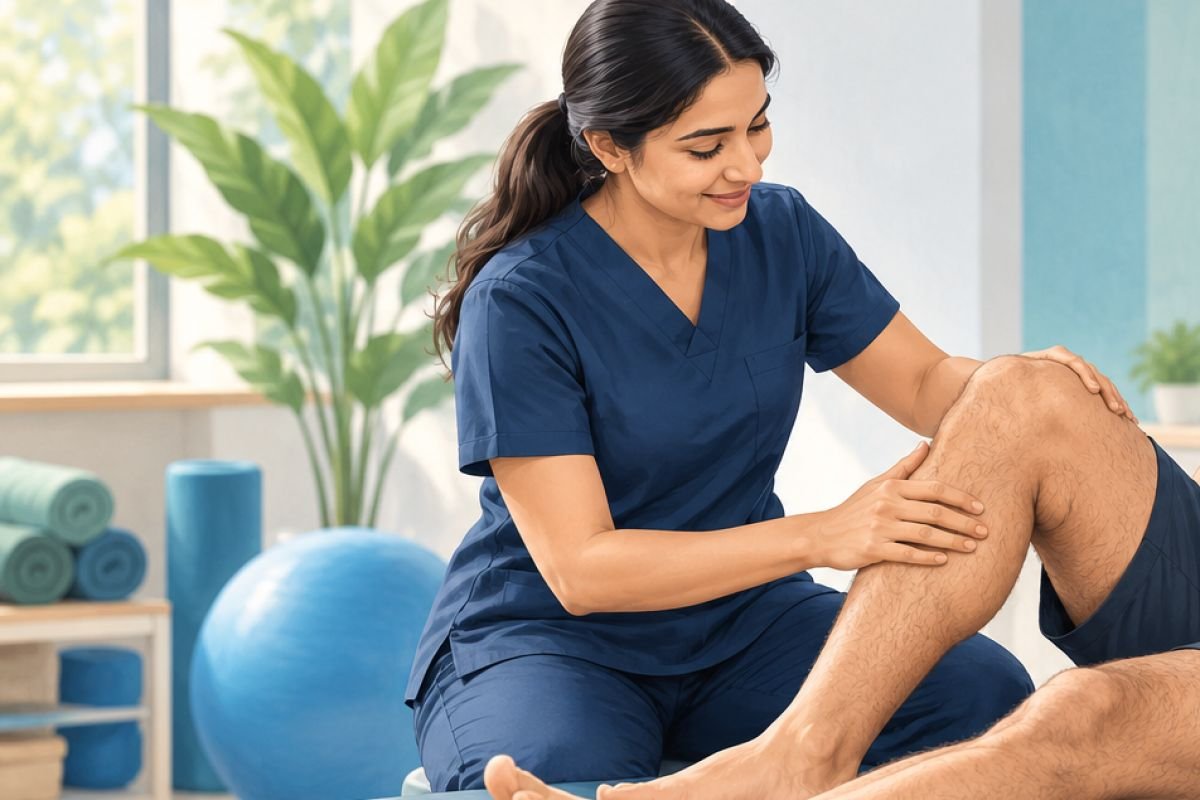
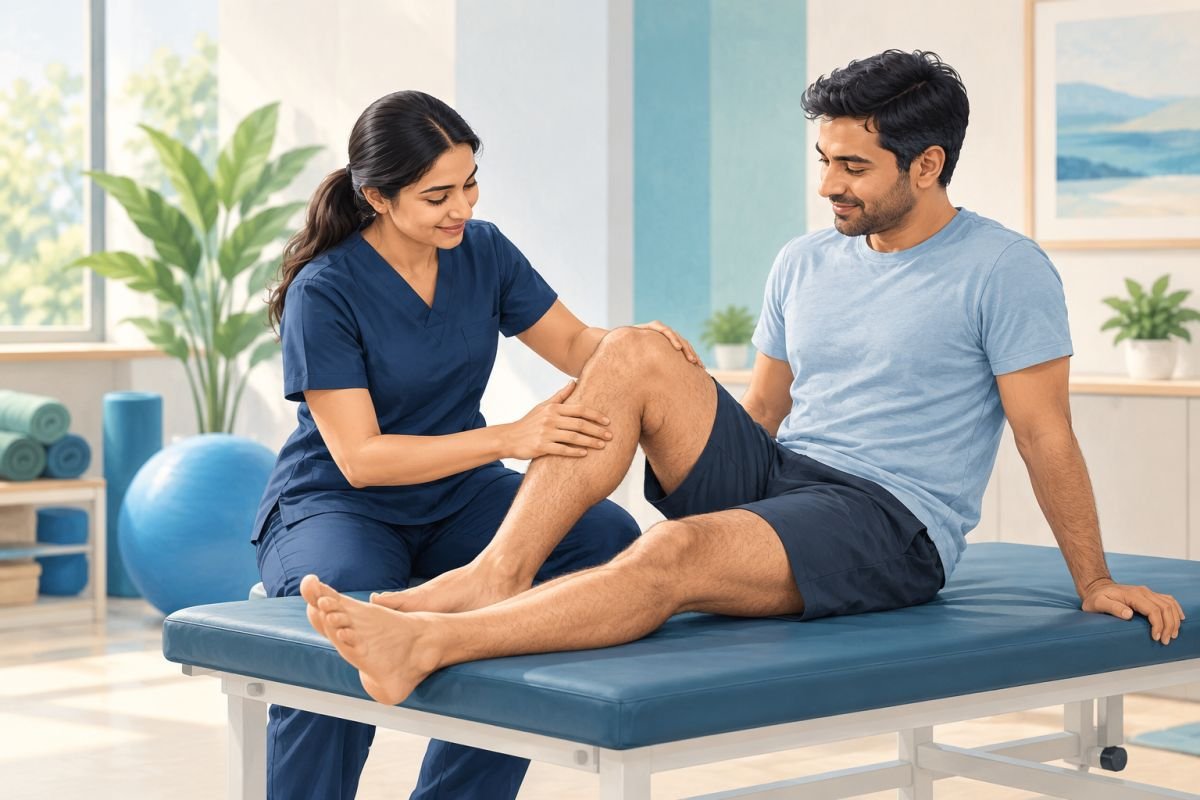
After injury, we assess swelling, range of motion, ligament tests and associated injuries. We commonly recommend orthopaedic review and MRI to confirm the diagnosis.
Before surgery, “prehabilitation” focuses on reducing swelling, restoring range and building strength, which can support post-operative recovery.
05Phases of ACL rehabilitation
Early phase
Swelling control, full knee straightening and quadriceps activation.
Strength phase
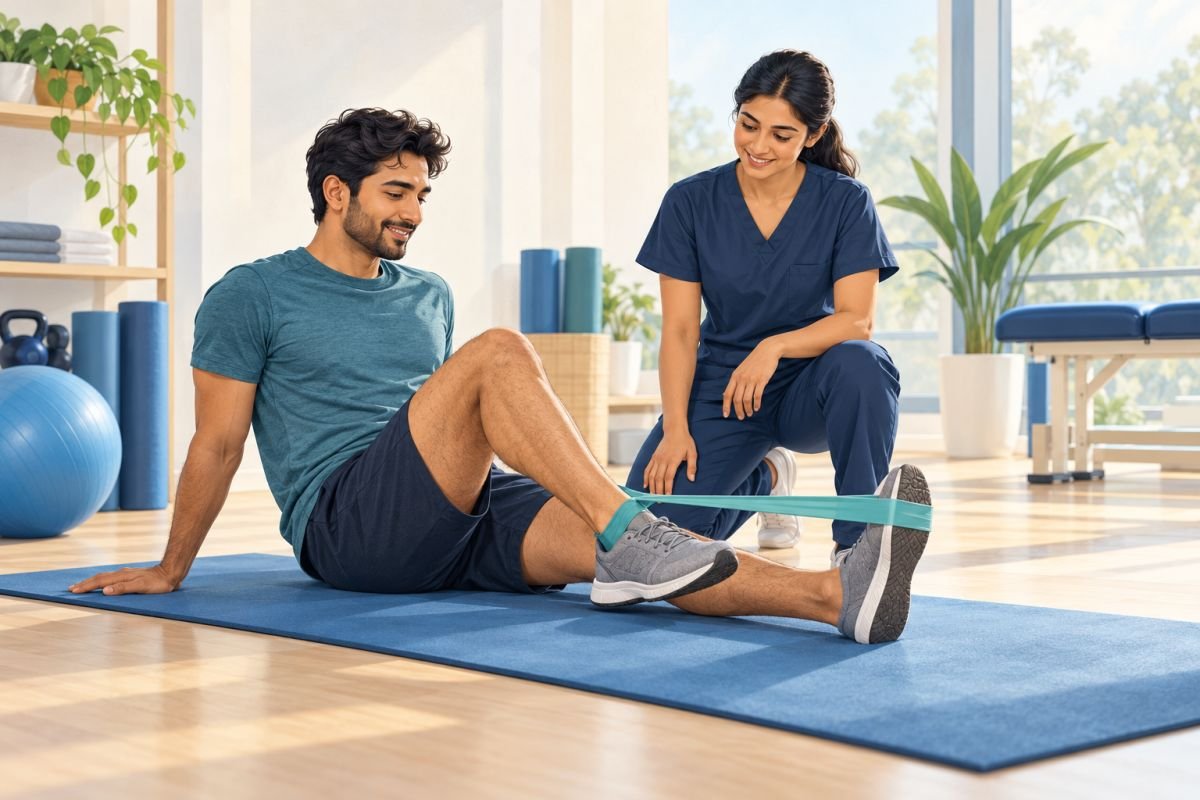
Progressive strengthening of quadriceps, hamstrings, hips and calves.
Neuromuscular phase
Balance, landing mechanics and movement control.
Running and agility
Return to running, then change-of-direction work when criteria are met.
Return-to-sport testing
Strength, hop and functional tests to support decision-making.
Injury prevention
Ongoing training to reduce risk of re-injury.
Your plan is chosen after assessment. Not every approach listed here is suitable for every person.
06Who may benefit
- Athletes before and after ACL reconstruction
- People managing ACL injury without surgery
- Players returning to cutting and pivoting sports
07Safety precautions
- Follow your surgeon’s graft-specific restrictions and timelines.
- Progression is based on meeting criteria rather than time alone.
- Returning to sport too early is associated with higher re-injury risk.
08When to see a doctor first
- Fever or signs of wound infection after surgery
- Calf pain and swelling
- Sudden loss of movement or locking
- New episodes of the knee giving way
09Frequently asked questions
How long does ACL rehabilitation take?
Return to cutting and pivoting sports after reconstruction usually takes many months, and timelines differ between people. We use objective criteria rather than a fixed date.
Can I play sport without an ACL?
Some people do, particularly in sports with less twisting. Others experience instability. This should be discussed with your surgeon and physiotherapist.
Is pre-surgery physiotherapy important?
Yes. Entering surgery with less swelling, full range and better strength can support recovery.
Can ACL injuries be prevented?
Neuromuscular training programmes that include strength, balance and landing technique have been shown to reduce ACL injury risk in athletes.
FURTHER READING
This page provides general information and is not a diagnosis or a substitute for an individual assessment. Recovery varies from person to person. See our medical disclaimer.