It is never too late to benefit from exercise. Studies have shown that older adults – including people in their 80s and beyond – can improve strength, balance and walking ability with appropriate training. These gains translate into real-life benefits: getting up from a chair more easily, walking further and feeling steadier.
01Why exercise matters with age
- Muscle strength naturally declines with age and inactivity, affecting everyday tasks.
- Balance training can help reduce the risk of falls.
- Regular activity supports heart health, mood, sleep and joint comfort.
- Staying active helps maintain independence.
The World Health Organization recommends that older adults do varied physical activity that emphasises functional balance and strength training on three or more days a week, as part of their overall weekly activity, to enhance functional capacity and prevent falls.
02The three types of exercise that matter most
1. Strength
Sit-to-stand from a chair, step-ups, wall push-ups and resistance-band exercises are simple, effective options. Start with a few repetitions and build gradually.
2. Balance
Standing with feet closer together, heel-to-toe standing and supported single-leg standing – always near a stable support such as a kitchen counter – are good starting points.
3. Walking and general activity
Regular walking at a comfortable pace supports endurance and heart health. Short, frequent walks are better than none at all.
03Safety precautions
- Check with your doctor before starting if you have heart disease, uncontrolled blood pressure, recent surgery, or have been advised to limit activity.
- Exercise near a stable support for balance work.
- Wear well-fitting, supportive footwear with good grip.
- Keep water nearby and avoid exercising in the hottest part of the day.
- Start low and progress slowly.
- If you have diabetes, follow your doctor’s guidance on blood sugar and exercise.
Stop exercising and seek medical help if you experience chest pain, severe breathlessness, dizziness, palpitations, or sudden weakness, numbness, speech or vision changes.
04Making the home safer
- Remove loose rugs and clutter from walkways.
- Use night lights, especially between bedroom and bathroom.
- Consider grab rails in the bathroom and near steps.
- Keep frequently used items within easy reach.
05How a physiotherapist can help
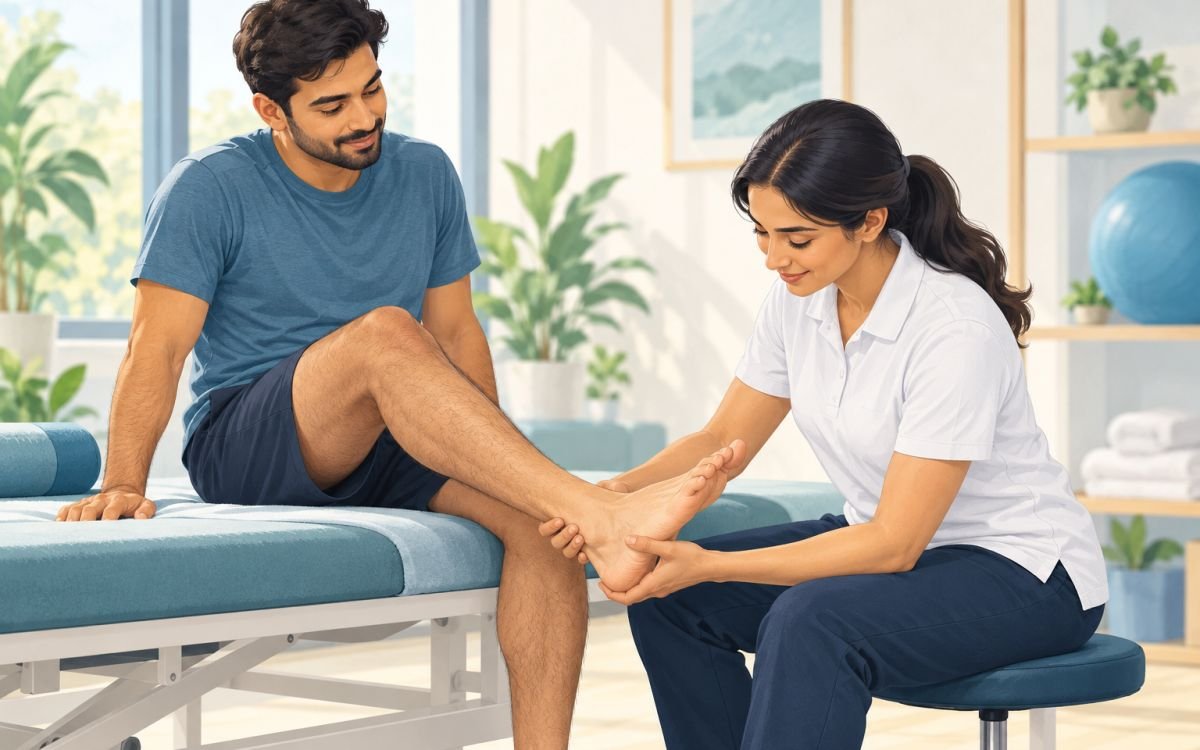
A physiotherapist can assess strength, balance and walking using simple tests, then design a safe, progressive programme. Family members can be shown how to support exercises at home, making it easier to stay consistent.
06Frequently asked questions
How often should older adults exercise?
Regular activity most days is ideal. Strength and balance work several times a week is particularly beneficial. A physiotherapist can suggest a realistic routine.
Is it safe to exercise with arthritis?
For most people, appropriate exercise is helpful for arthritis. Programmes should be tailored to symptoms.
For advice about your own symptoms, book an assessment at our New Panvel clinic.
This article is for general education and does not replace personal medical advice. If you have symptoms, please consult a qualified healthcare professional. See our medical disclaimer.